MCP Servers with Claude: How AI Becomes Production-Ready
Raw prompts make AI hard to trust with real systems. The Model Context Protocol fixes that by routing every action through predefined tools with clear contracts, keeping the AI a controlled component instead of a wildcard.
 Vanshit Patel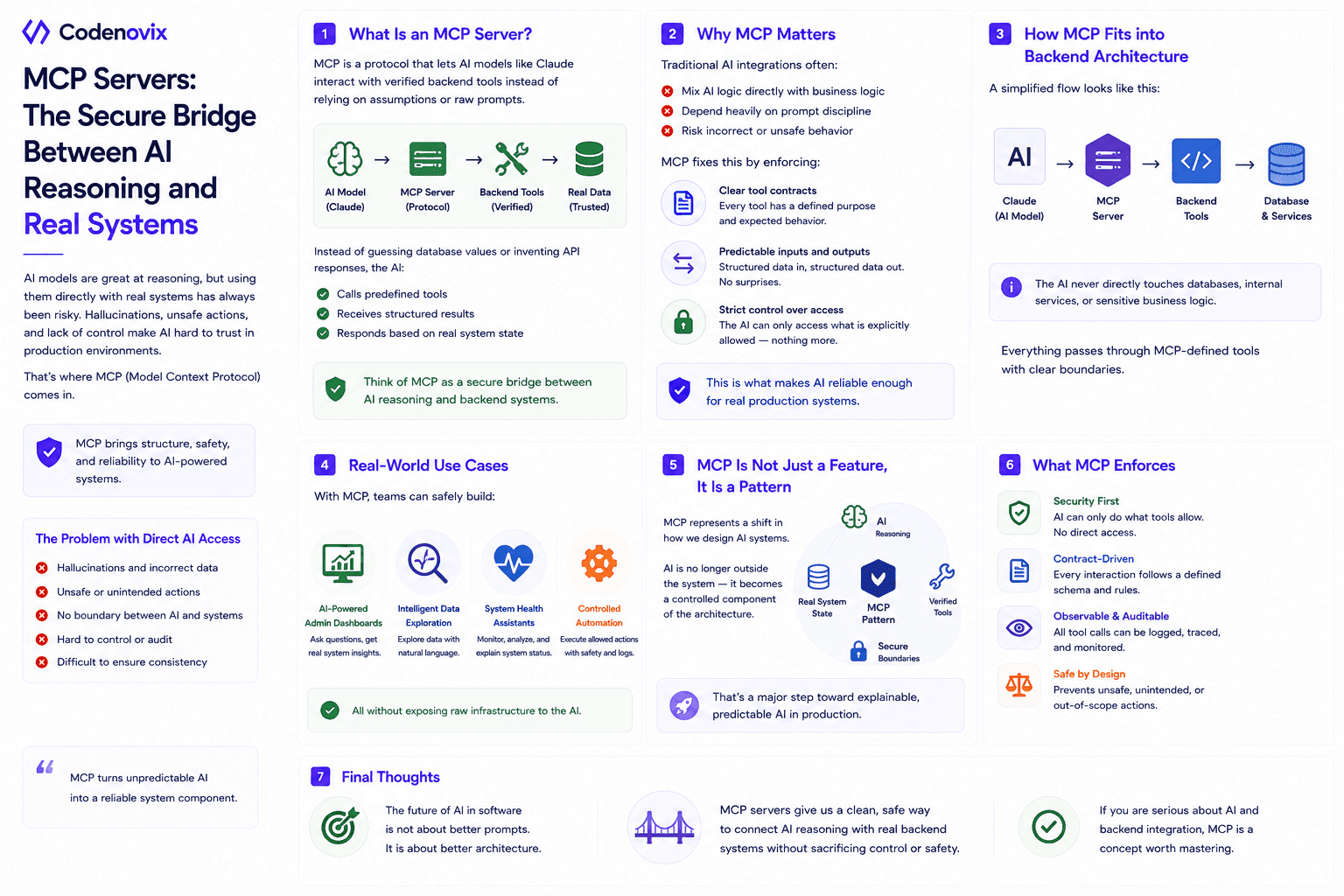
AI models are great at reasoning, but using them directly with real systems has always been risky. Hallucinations, unsafe actions, and lack of control make AI hard to trust in production environments. That's where MCP (Model Context Protocol) comes in.
What Is an MCP Server?
MCP is a protocol that lets AI models like Claude interact with verified backend tools instead of relying on assumptions or raw prompts.
Instead of guessing database values or inventing API responses, the AI:
- Calls predefined tools
- Receives structured results
- Responds based on real system state
You can think of MCP as a secure bridge between AI reasoning and backend systems.
Why MCP Matters
Traditional AI integrations often mix AI logic directly with business logic, depend heavily on prompt discipline, and risk incorrect or unsafe behavior.
MCP fixes this by enforcing:
- Clear tool contracts
- Predictable inputs and outputs
- Strict control over what the AI can and cannot access
This is what makes AI reliable enough for real production systems.
How MCP Fits into Backend Architecture
A simplified flow looks like this: Claude calls an MCP server, which calls backend tools and the database.
The AI never directly touches databases, internal services, or sensitive business logic. Everything passes through MCP-defined tools with clear boundaries.
Real-World Use Cases
With MCP, teams can safely build:
- AI-powered admin dashboards
- Intelligent data exploration tools
- System health and analytics assistants
- Controlled operational automation
All without exposing raw infrastructure to the AI.
MCP Is Not Just a Feature, It Is a Pattern
MCP represents a shift in how we design AI systems. AI is no longer outside the system — it becomes a controlled component of the architecture. That's a major step toward explainable, predictable AI in production.
Final Thoughts
The future of AI in software is not about better prompts. It is about better architecture.
MCP servers give us a clean, safe way to connect AI reasoning with real backend systems without sacrificing control or safety. If you are serious about AI and backend integration, MCP is a concept worth mastering.
Found this useful?
Share it with the dev community or cross-post with a canonical link back here.
Cross-posting to dev.to or Hashnode? Use this as your canonical URL: https://www.codenovix.com/blog/mcp-servers-with-claude-production-ready-ai
Related articles
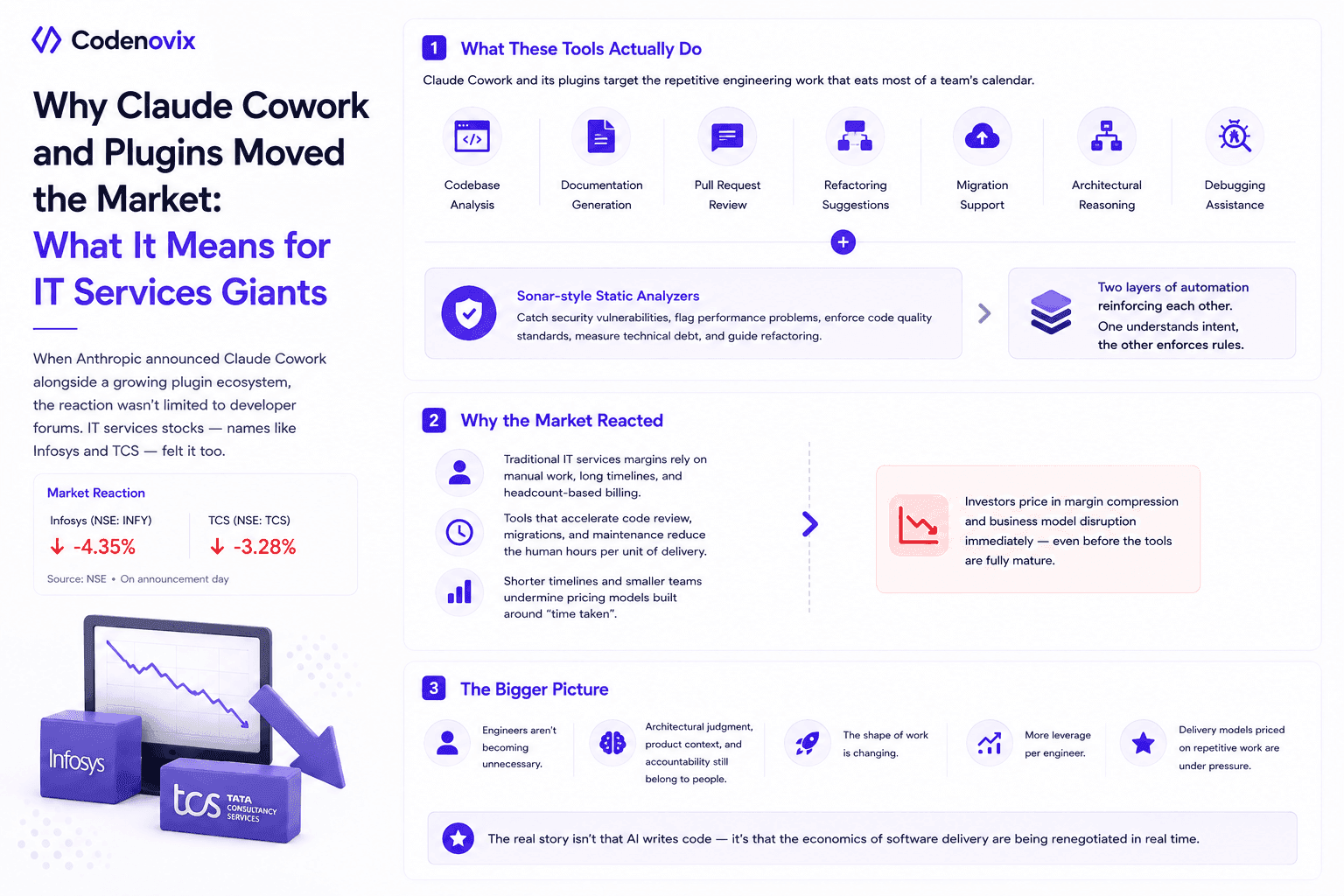
What Claude Cowork, New Plugins, and Sonar-Style Analysis Tools Say About the Future of Software
IT services stocks moved when Anthropic announced Claude Cowork and its plugins. Here's what these tools and Sonar-style analyzers actually automate, and why that spooked the outsourcing model.
 Vanshit Patel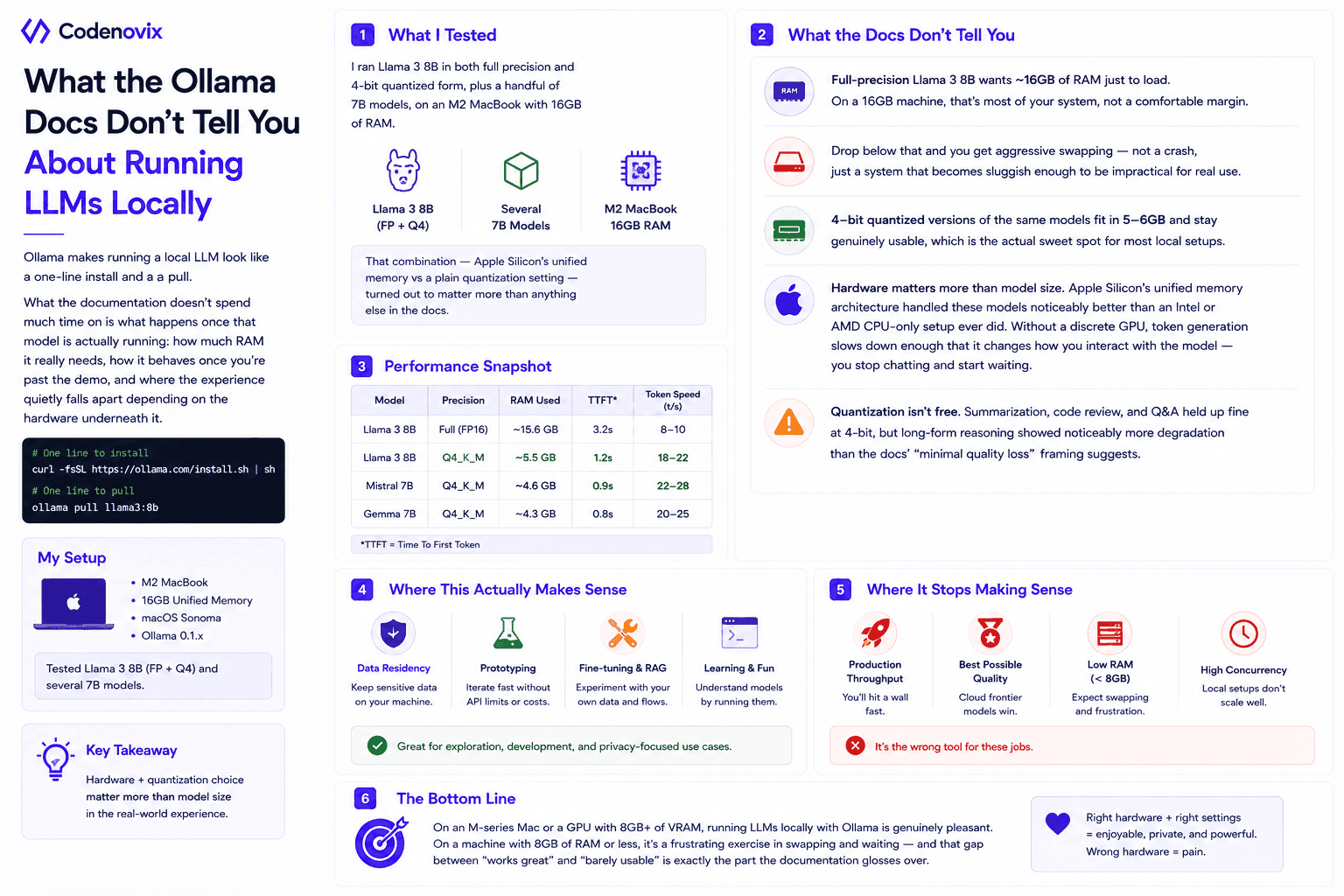
Running LLMs Locally with Ollama: What the Documentation Doesn't Tell You
Ollama's docs cover the install and the pull command. They don't cover the 16GB RAM cliff, the swapping, or why Apple Silicon runs circles around a CPU-only setup.
Vanshit Patel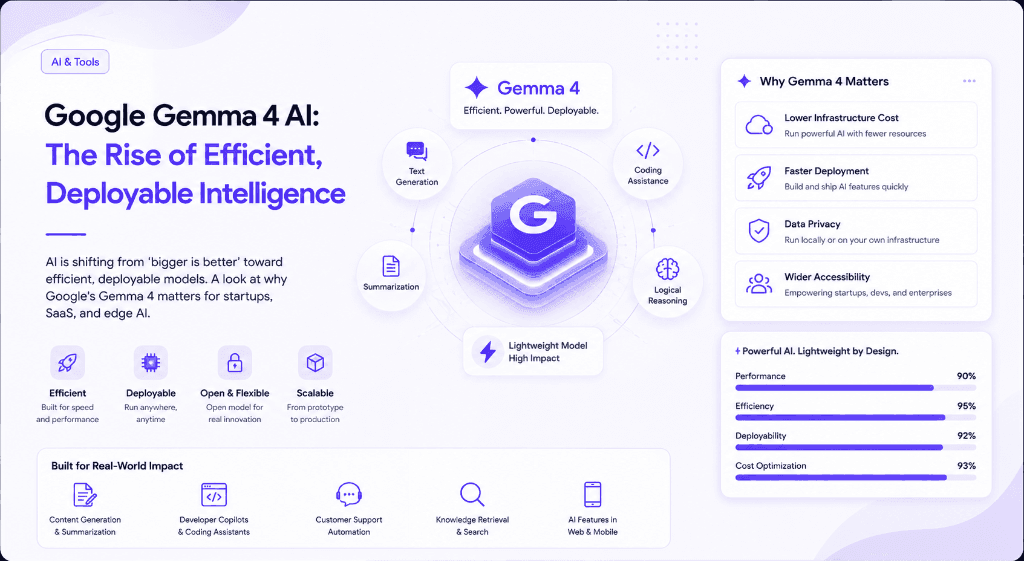
Google Gemma 4 AI: The Rise of Efficient, Deployable Intelligence
AI is shifting from 'bigger is better' toward efficient, deployable models. A look at why Google's Gemma 4 matters for startups, SaaS, and edge AI.
Vanshit Patel