Google Gemma 4 AI: The Rise of Efficient, Deployable Intelligence
AI is shifting from 'bigger is better' toward efficient, deployable models. A look at why Google's Gemma 4 matters for startups, SaaS, and edge AI.
 Vanshit Patel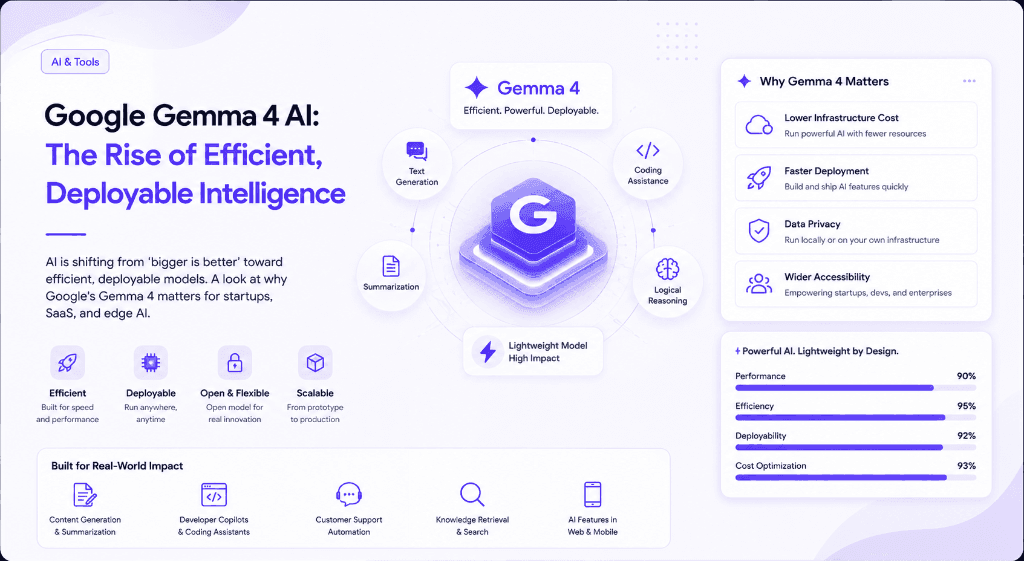
Artificial Intelligence has entered a phase where performance alone is no longer enough. For years, the focus has been on building larger, more powerful models capable of solving complex problems. However, this approach comes with a cost — high computational requirements, expensive infrastructure, and limited accessibility for smaller teams.
Google's Gemma 4 AI reflects a shift in this narrative.
Rather than competing solely on size and raw power, Gemma 4 is designed to balance capability with efficiency. It is a lightweight, open model that can perform essential AI tasks such as text generation, summarization, coding assistance, and logical reasoning, while remaining significantly more deployable than traditional large-scale systems.
Why Efficiency Matters Now
As AI adoption grows across industries, the gap between experimentation and production becomes more visible. Many organizations can prototype with large models, but deploying them at scale is often impractical due to cost and infrastructure constraints.
This is where efficient models like Gemma 4 become important.
By reducing resource requirements, such models allow developers to integrate AI directly into applications without relying heavily on cloud-based, high-cost environments. This opens up opportunities for:
- Startups building AI-first products
- SaaS platforms adding intelligent features
- Enterprises optimizing operational workflows
- Edge devices running AI locally
Efficiency is no longer just a technical advantage — it is a business enabler.
Real-World Use Cases
Gemma 4's design makes it suitable for a wide range of practical applications:
- Content generation and summarization tools
- Developer copilots and coding assistants
- Customer support automation systems
- Knowledge retrieval and internal search tools
- Lightweight AI features in mobile and web applications
Because it requires fewer resources, it can be deployed faster and scaled more sustainably.
A Shift in AI Strategy
The release of Gemma 4 highlights a broader trend in AI development. The industry is moving away from a "bigger is always better" mindset toward a more balanced approach.
The future of AI will not be defined only by the most powerful models, but by the models that are:
- Efficient
- Scalable
- Cost-effective
- Easy to integrate
This shift is critical for democratizing AI and making it accessible beyond large tech companies.
Final Thoughts
Google's Gemma 4 AI represents more than just another model release. It signals a change in how we think about building and using AI systems.
As demand for AI-powered applications continues to grow, the ability to deploy models efficiently will become just as important as their capabilities.
In that sense, Gemma 4 is not just a technological improvement — it is a step toward making AI more practical, usable, and widely accessible.
Found this useful?
Share it with the dev community or cross-post with a canonical link back here.
Cross-posting to dev.to or Hashnode? Use this as your canonical URL: https://www.codenovix.com/blog/google-gemma-4-ai-efficient-deployable-intelligence
Related articles
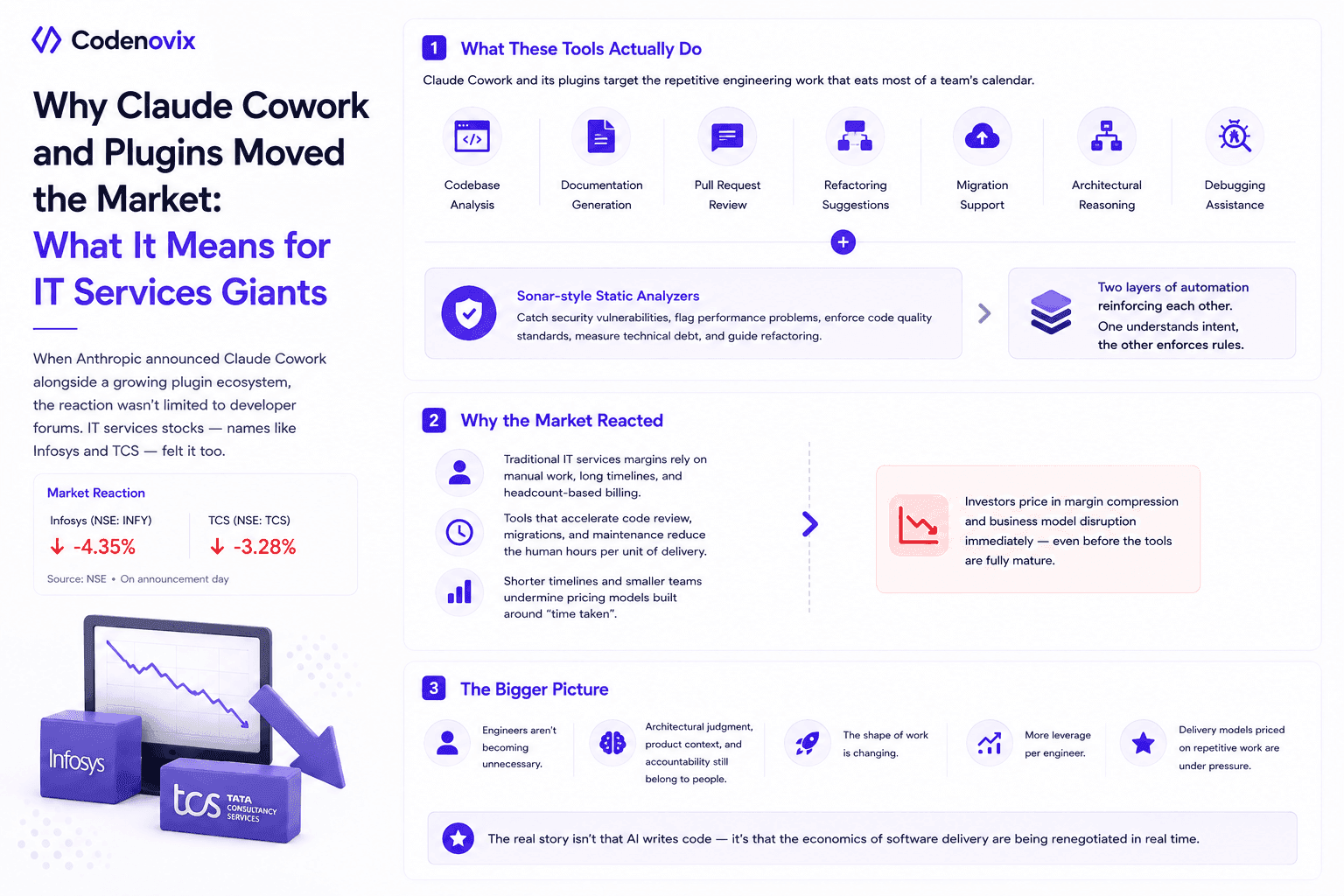
What Claude Cowork, New Plugins, and Sonar-Style Analysis Tools Say About the Future of Software
IT services stocks moved when Anthropic announced Claude Cowork and its plugins. Here's what these tools and Sonar-style analyzers actually automate, and why that spooked the outsourcing model.
 Vanshit Patel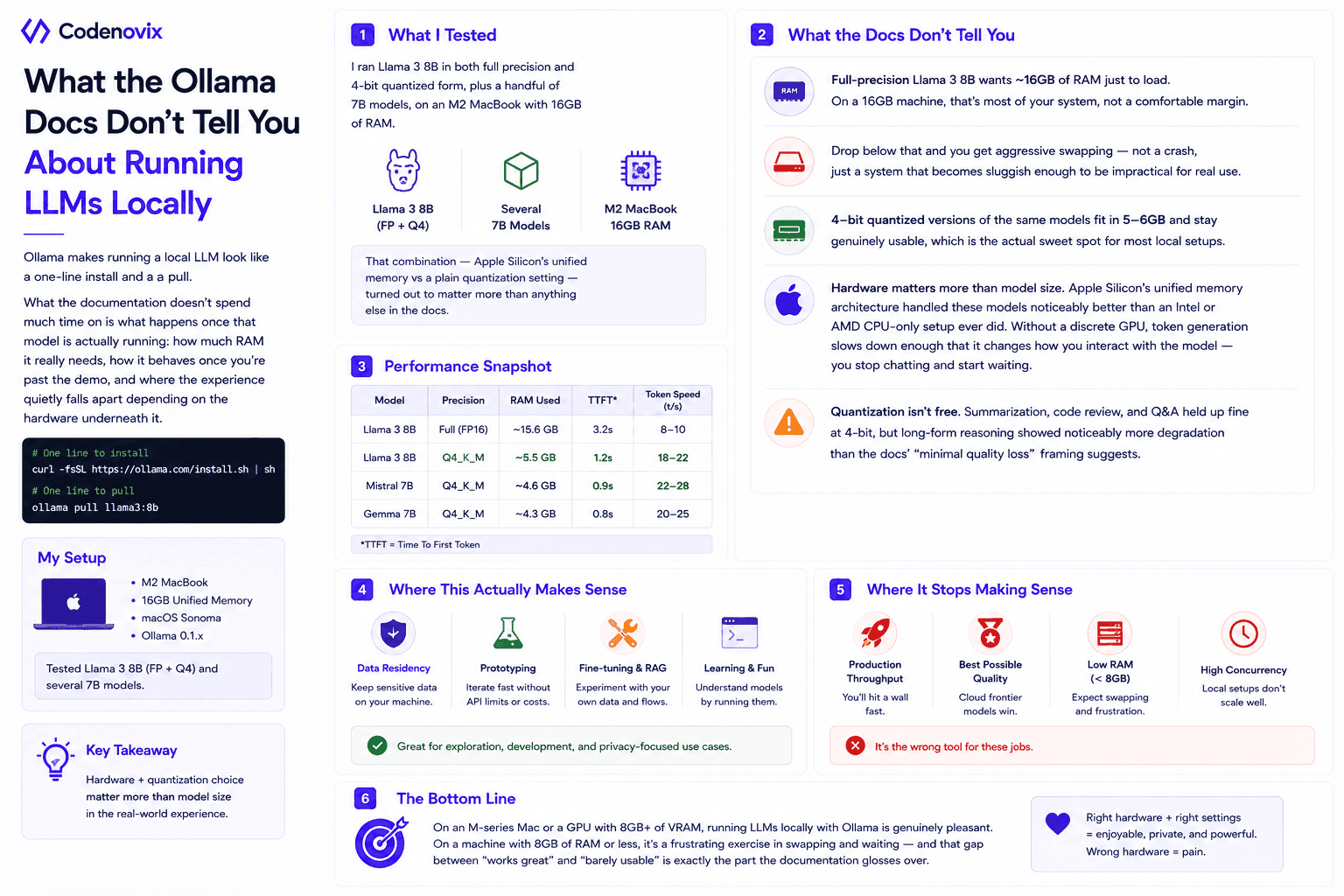
Running LLMs Locally with Ollama: What the Documentation Doesn't Tell You
Ollama's docs cover the install and the pull command. They don't cover the 16GB RAM cliff, the swapping, or why Apple Silicon runs circles around a CPU-only setup.
Vanshit Patel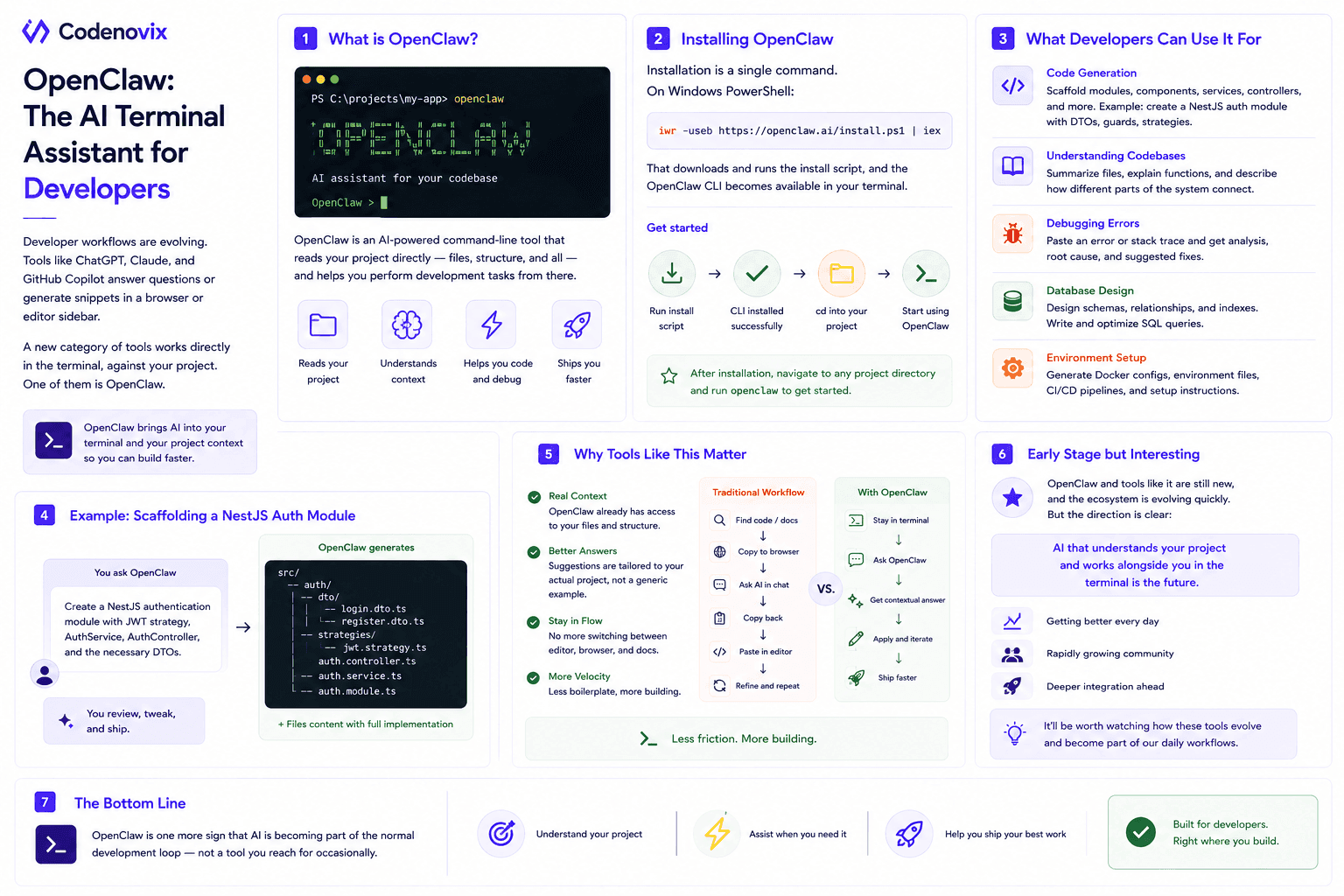
OpenClaw: An AI Developer Assistant That Works From Your Terminal
Most AI tools only understand your project once you paste code into them. A terminal-native assistant already has the files and structure, which is why its suggestions land closer to what you need.
Vanshit Patel