Why GraphQL with Apollo is Important for Modern Applications
REST struggles as systems scale. See how GraphQL with Apollo collapses many endpoints into one flexible query layer for microservices.
 Vanshit Patel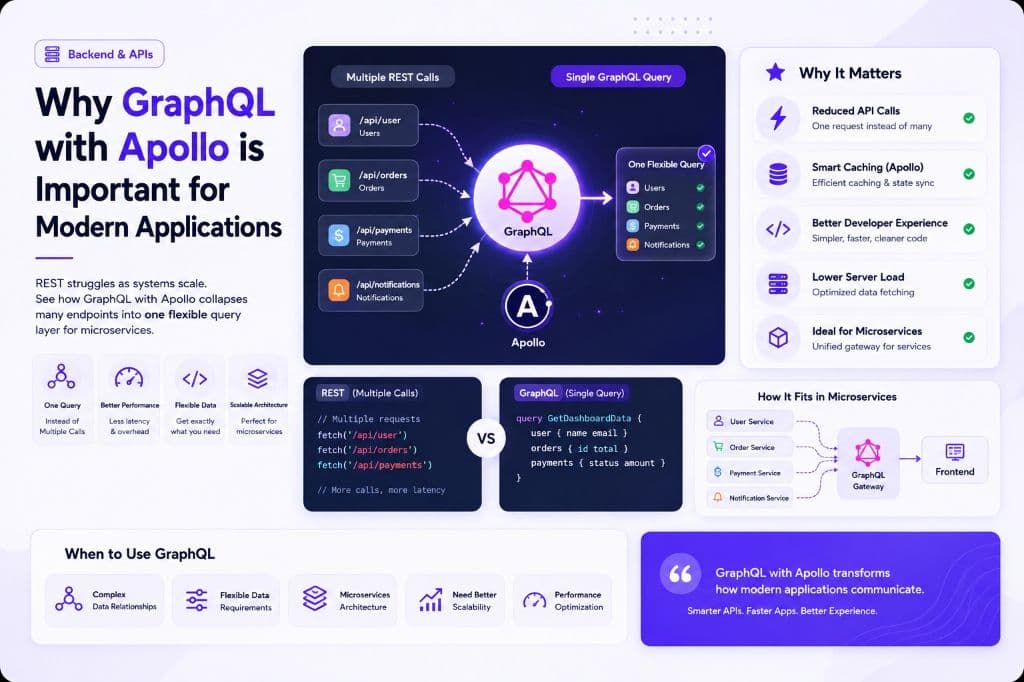
In modern web development, especially when working with microservices, handling data efficiently becomes one of the biggest challenges. Traditional REST APIs often fall short when applications scale and data requirements become more dynamic.
This is where GraphQL, combined with Apollo, brings a significant shift.
The Problem with REST in Complex Systems
In a typical REST-based architecture, a single UI screen may require data from multiple services. For example:
- User details →
/api/user - Orders →
/api/orders - Payments →
/api/payments
This leads to multiple API calls from the frontend. In microservices, this becomes even more complex because each service is independent.
Problems with this approach:
- Increased number of API calls
- Higher server load
- Over-fetching or under-fetching of data
- Complex frontend logic to manage multiple responses
GraphQL: One Query Instead of Multiple Calls
GraphQL solves this problem by allowing the client to request exactly the data it needs in a single query.
Instead of calling 3 different APIs, you make one request like:
- Fetch user
- Fetch orders
- Fetch payments
All in one response.
This reduces:
- Network overhead
- Latency
- Backend load
The idea is simple but powerful: move from multiple endpoints to a single flexible query layer.
Apollo: Making GraphQL Practical
While GraphQL defines the structure, Apollo provides the tools to implement it efficiently.
Apollo Client (frontend) offers:
- Smart caching
- State management
- Automatic UI updates
Apollo Server (backend) helps:
- Combine multiple microservices into one GraphQL layer
- Manage schema and resolvers
- Optimize data fetching
Impact on Microservices Architecture
In microservices, each service operates independently. Without GraphQL, the frontend needs to communicate with each service separately.
GraphQL acts as a unified gateway:
- Aggregates multiple services
- Provides a single API interface
- Simplifies frontend logic
This makes the system cleaner and easier to scale.
Performance and Server Load Reduction
One of the biggest advantages is performance optimization.
- Multiple API calls → Single API call
- Reduced server processing overhead
- Efficient data fetching (no extra data)
This directly reduces server load and improves response time.
When to Use GraphQL
GraphQL is especially useful when:
- You have complex data relationships
- Your frontend requires flexible data
- You are working with microservices
- Performance and scalability are critical
Final Thoughts
GraphQL with Apollo is not just a new tool. It is a better way to design APIs for modern applications.
By reducing multiple API calls into a single request, it simplifies architecture, improves performance, and makes development more efficient.
As applications grow more complex, adopting GraphQL becomes less of an option and more of a necessity.
Found this useful?
Share it with the dev community or cross-post with a canonical link back here.
Cross-posting to dev.to or Hashnode? Use this as your canonical URL: https://www.codenovix.com/blog/why-graphql-with-apollo-is-important
Related articles
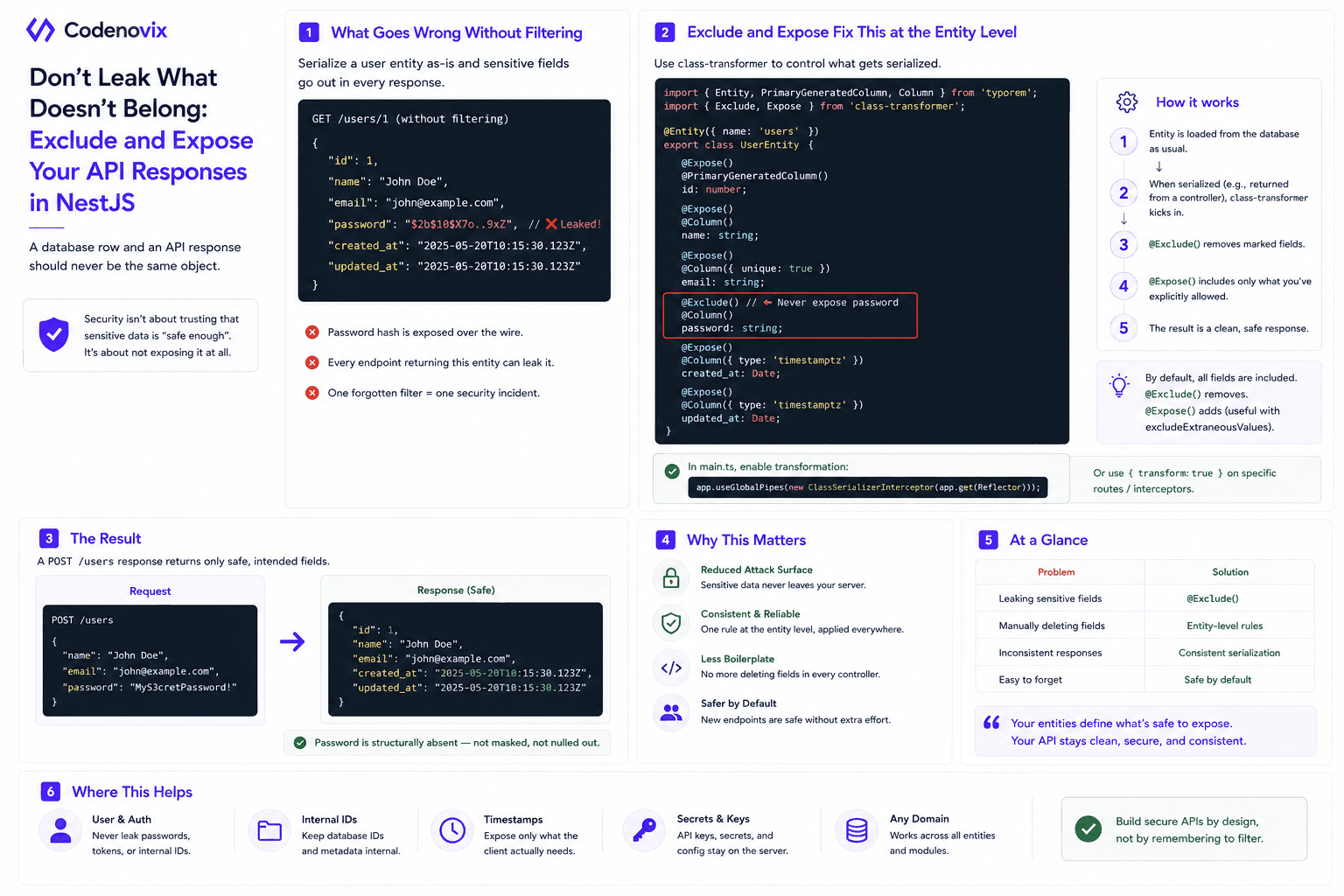
Using Exclude and Expose in NestJS Entities to Control API Responses
A hashed password still shouldn't leave your API. class-transformer's @Exclude and @Expose decorators make an entity define what's safe to serialize, instead of trusting every controller to filter it manually.
 Vanshit Patel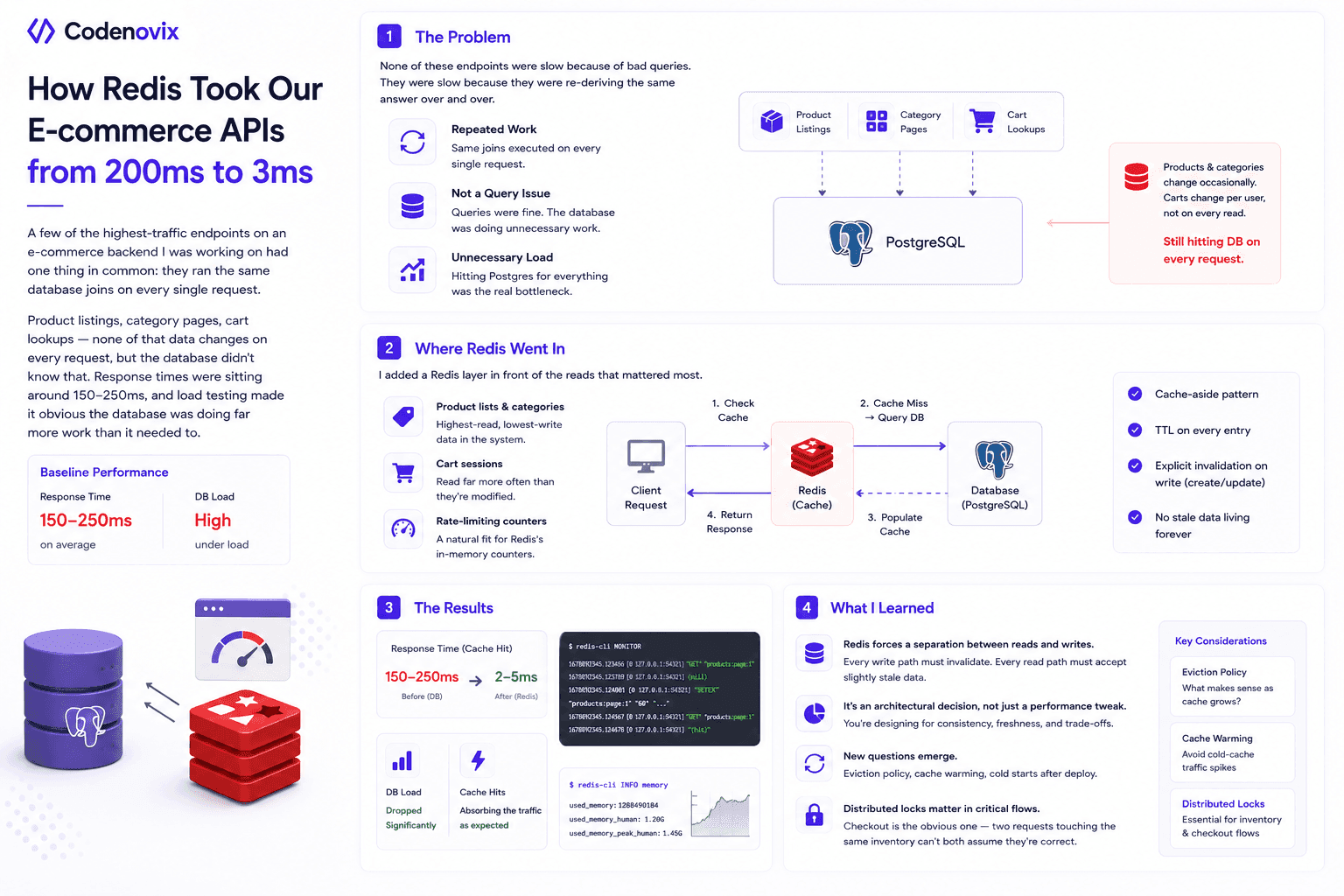
I Added Redis Caching to My E-Commerce Backend, and the Performance Difference Surprised Me
High-read endpoints were re-running the same database joins on every request, pushing response times to 150-250ms. Here's how a cache-aside Redis layer cut that to single-digit milliseconds.
Vanshit Patel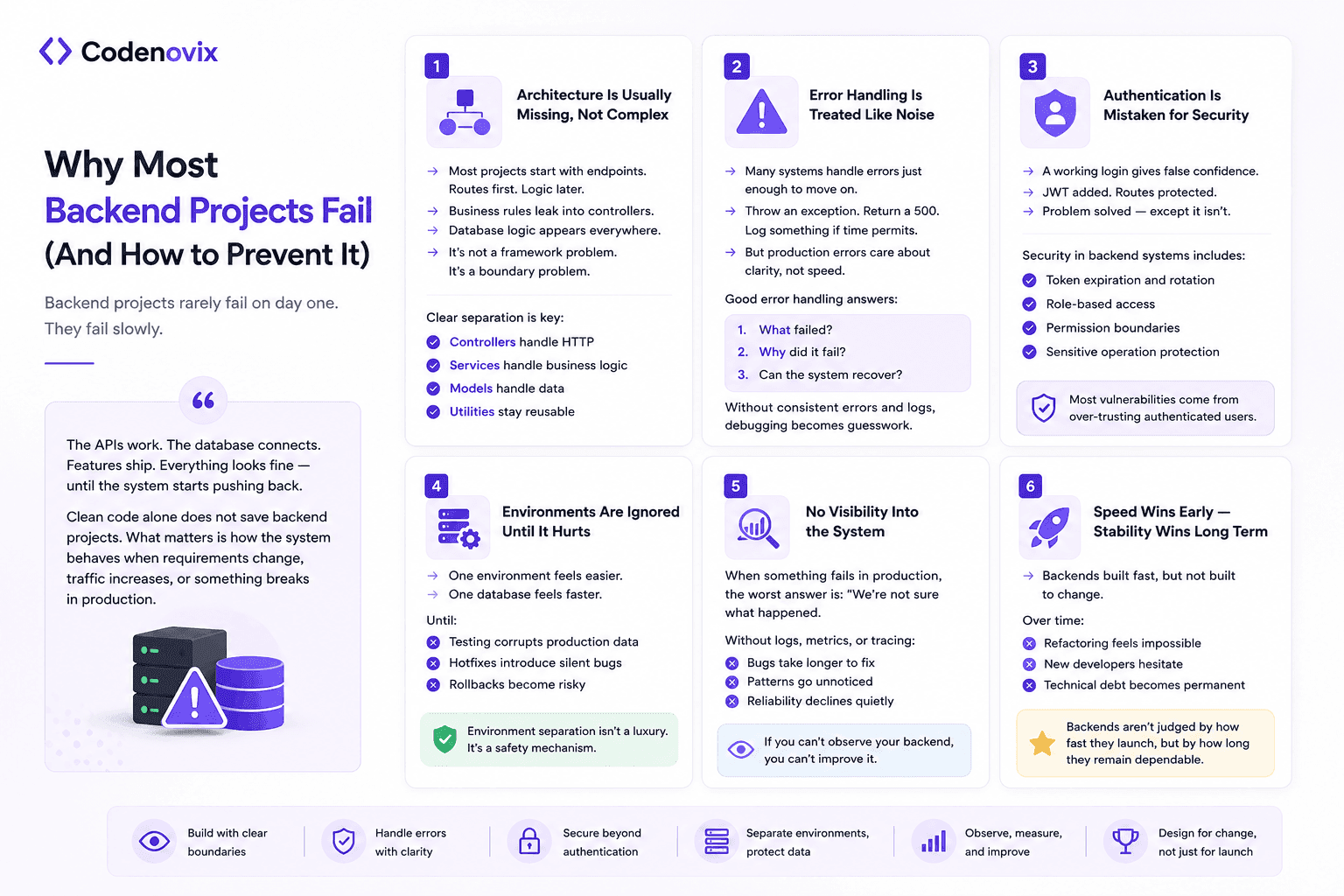
How Designing a Clean Backend Folder Structure Improved Performance and Scalability
A messy backend structure doesn't just look bad — it slows down debugging, onboarding, and scaling. Here's how reorganizing folders into Core, Config, Module, and Shared layers changed both.
Vanshit Patel