Managing Product Variant Complexity in E-Commerce Systems
Product variants look like a simple one-to-many relationship — until they touch every module. Lessons from restructuring Product, Cart, and Order schemas around a single source of truth.
 Vanshit Patel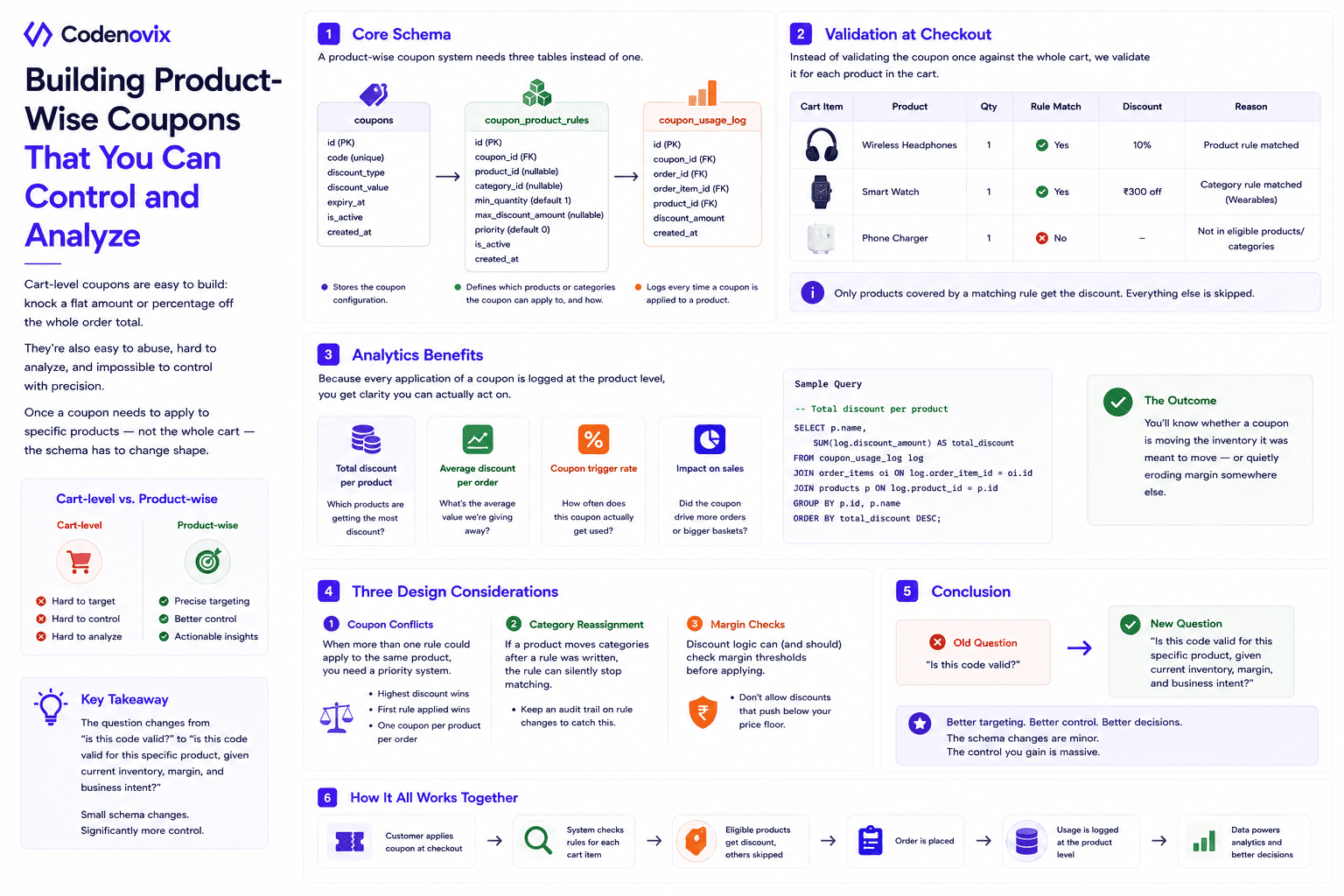
While building out a Product Module recently, I hit a common but significant hurdle: implementing product variants like size, color, and SKU-specific quantities. On paper, it looks like a simple one-to-many relationship. In practice, it impacts every core module in the system.
The Challenge
I originally built a separate product_variants table, but the integration with the Cart and Order modules was clunky. Because the relationships between a base product, its variants, and a user's cart item weren't strictly defined, I ran into issues where the system struggled to track exactly which version of a product was being purchased or reserved.
The Solution
I had to pause and restructure the data flow to ensure a "single source of truth." The overhaul included:
- Consistent Attribute Management: Standardizing how size, color, and quantity are handled across both the frontend and backend.
- Variant-Centric APIs: Modifying the Product and Cart APIs so that every transaction references a specific Variant ID. This ensures that a "Medium Red Shirt" is treated as its own distinct entity for inventory purposes.
- Order Mapping: Updating the Order APIs to store specific variant snapshots within order items. This prevents data loss if a product's attributes are modified after a sale.
The Conclusion
This redesign removed ambiguity across the modules and simplified the logic required for future features like stock validation and variant-based pricing.
The primary lesson learned is that database and entity design decisions ripple through every layer of an application. If you are building an e-commerce system, map out exactly how a variant moves from the product catalog to the final order invoice before you finalize your schema. It is much easier to fix a diagram than it is to refactor a production API.
Found this useful?
Share it with the dev community or cross-post with a canonical link back here.
Cross-posting to dev.to or Hashnode? Use this as your canonical URL: https://www.codenovix.com/blog/managing-product-variant-complexity
Related articles
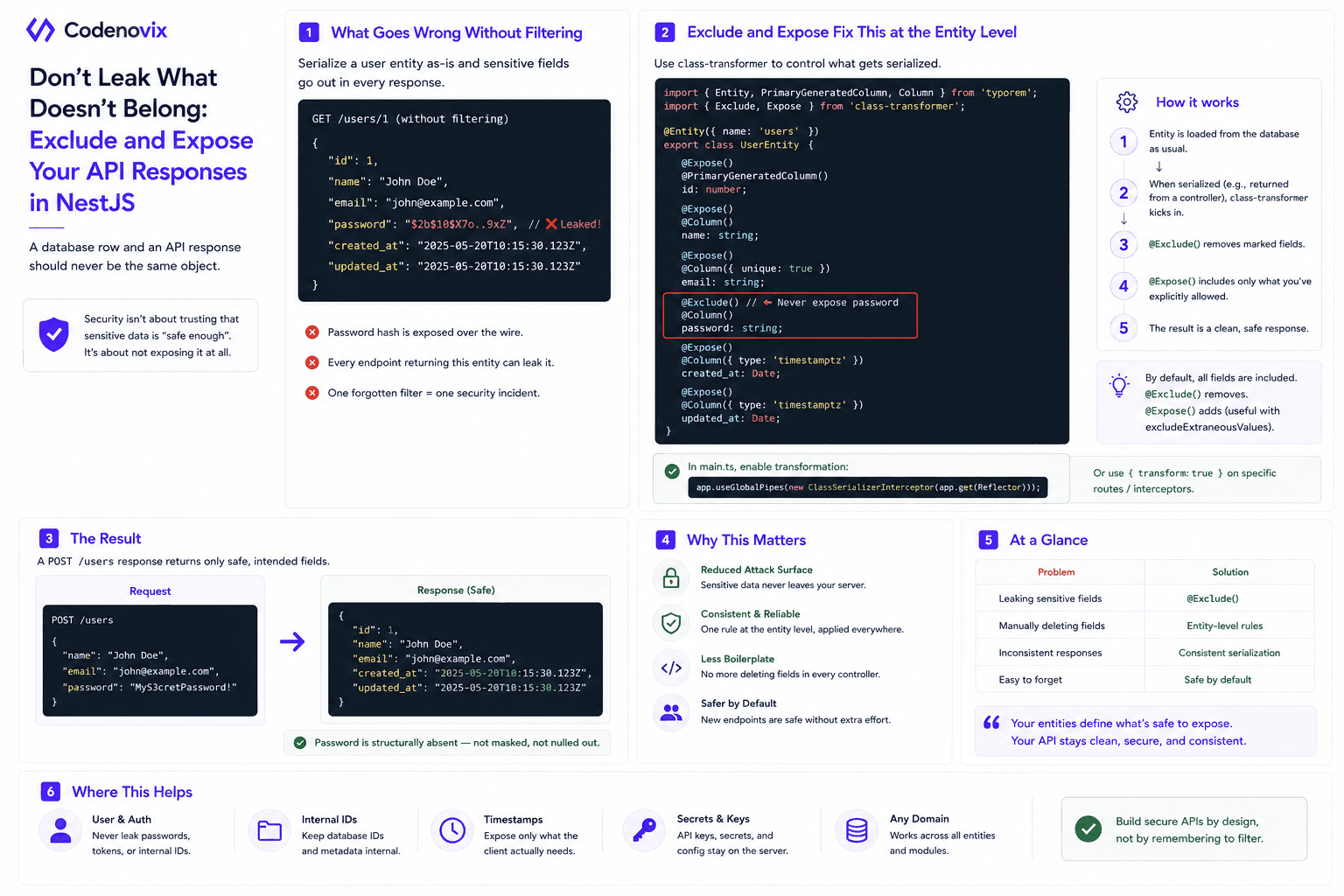
Using Exclude and Expose in NestJS Entities to Control API Responses
A hashed password still shouldn't leave your API. class-transformer's @Exclude and @Expose decorators make an entity define what's safe to serialize, instead of trusting every controller to filter it manually.
 Vanshit Patel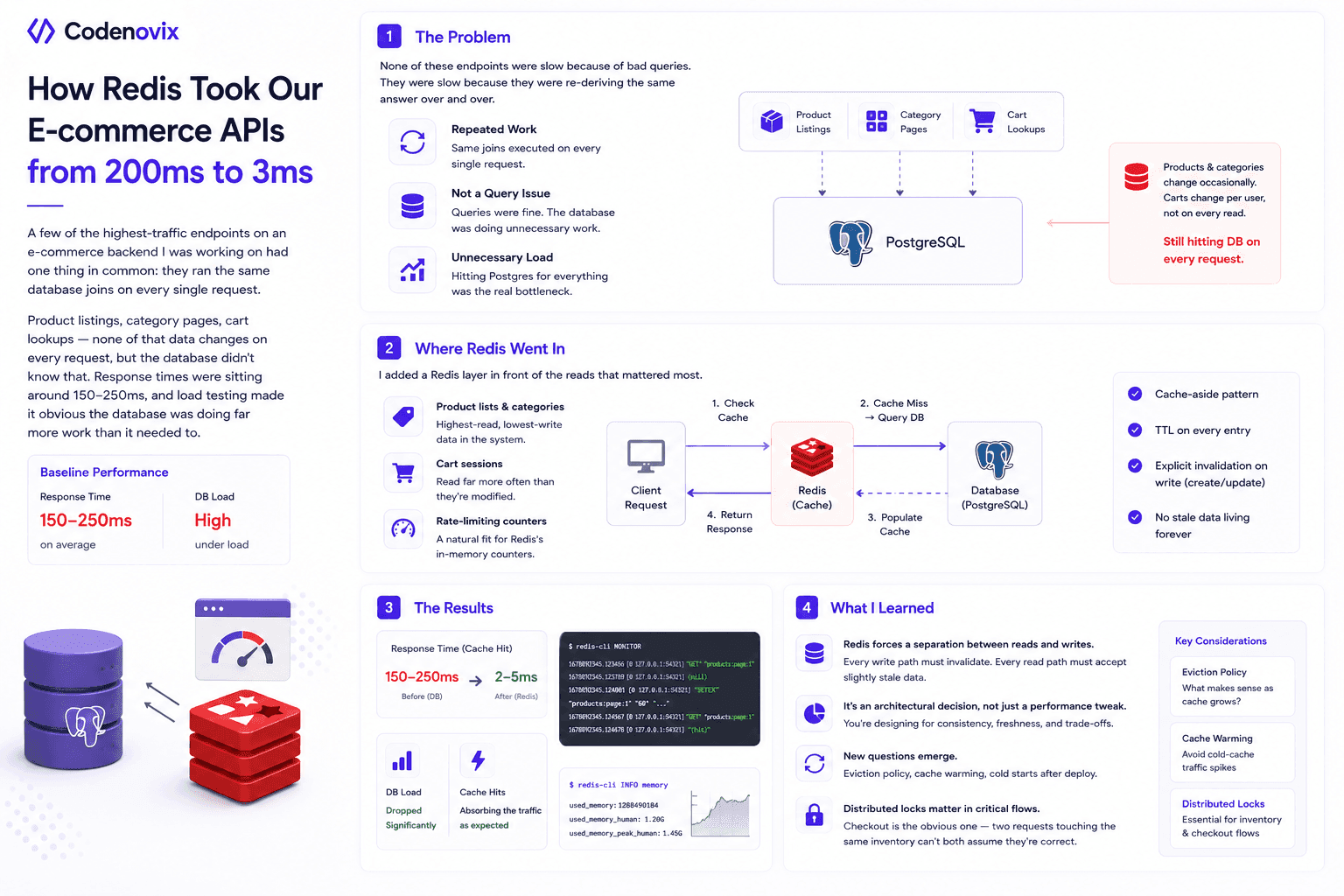
I Added Redis Caching to My E-Commerce Backend, and the Performance Difference Surprised Me
High-read endpoints were re-running the same database joins on every request, pushing response times to 150-250ms. Here's how a cache-aside Redis layer cut that to single-digit milliseconds.
Vanshit Patel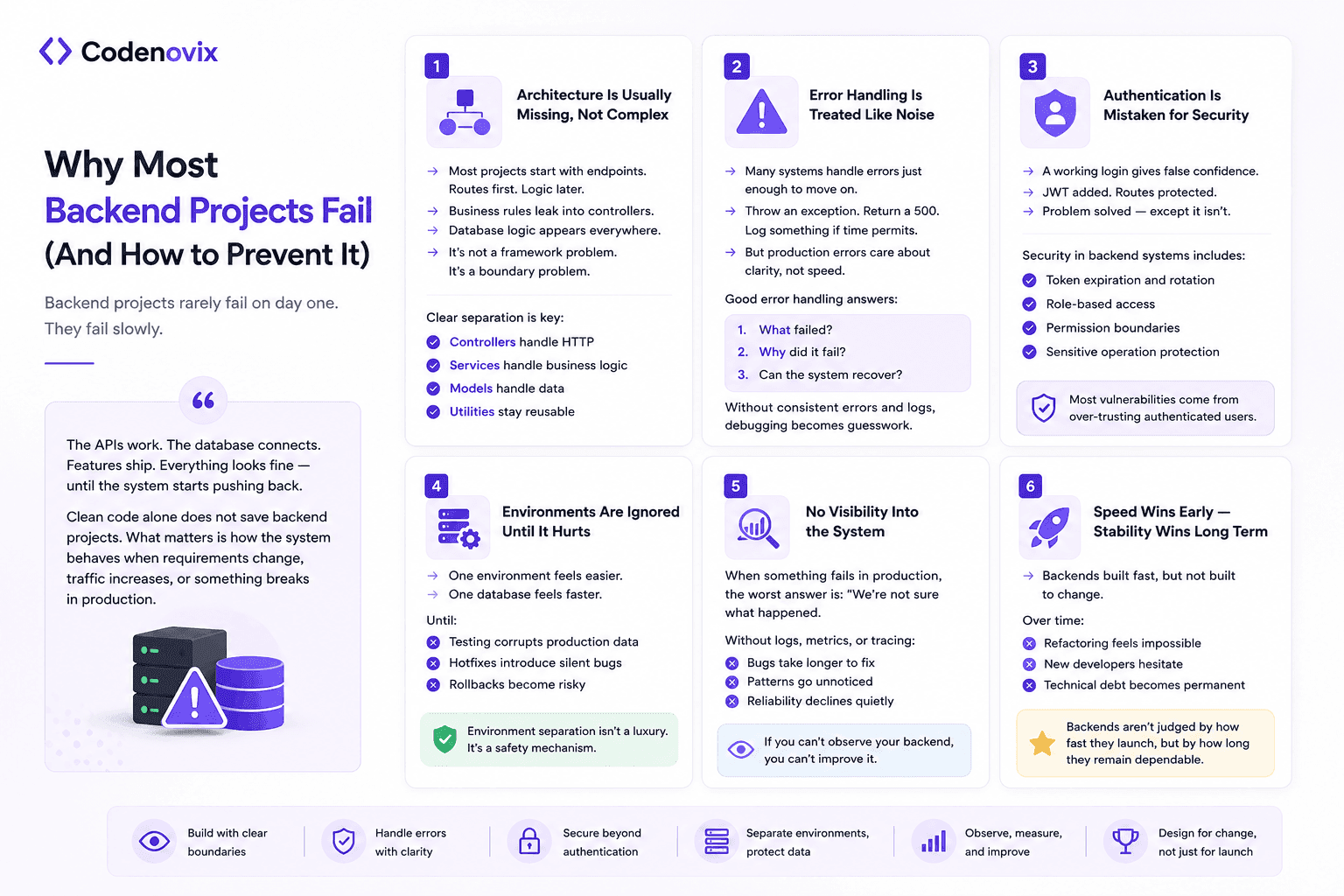
How Designing a Clean Backend Folder Structure Improved Performance and Scalability
A messy backend structure doesn't just look bad — it slows down debugging, onboarding, and scaling. Here's how reorganizing folders into Core, Config, Module, and Shared layers changed both.
Vanshit Patel