Cypress Testing: Balancing Velocity and Stability in Modern Engineering
Cypress runs inside the browser instead of driving it remotely, which is why its automatic waiting kills flaky tests instead of just hiding them. Speed and stability aren't a tradeoff — they're the same investment.
 Vanshit Patel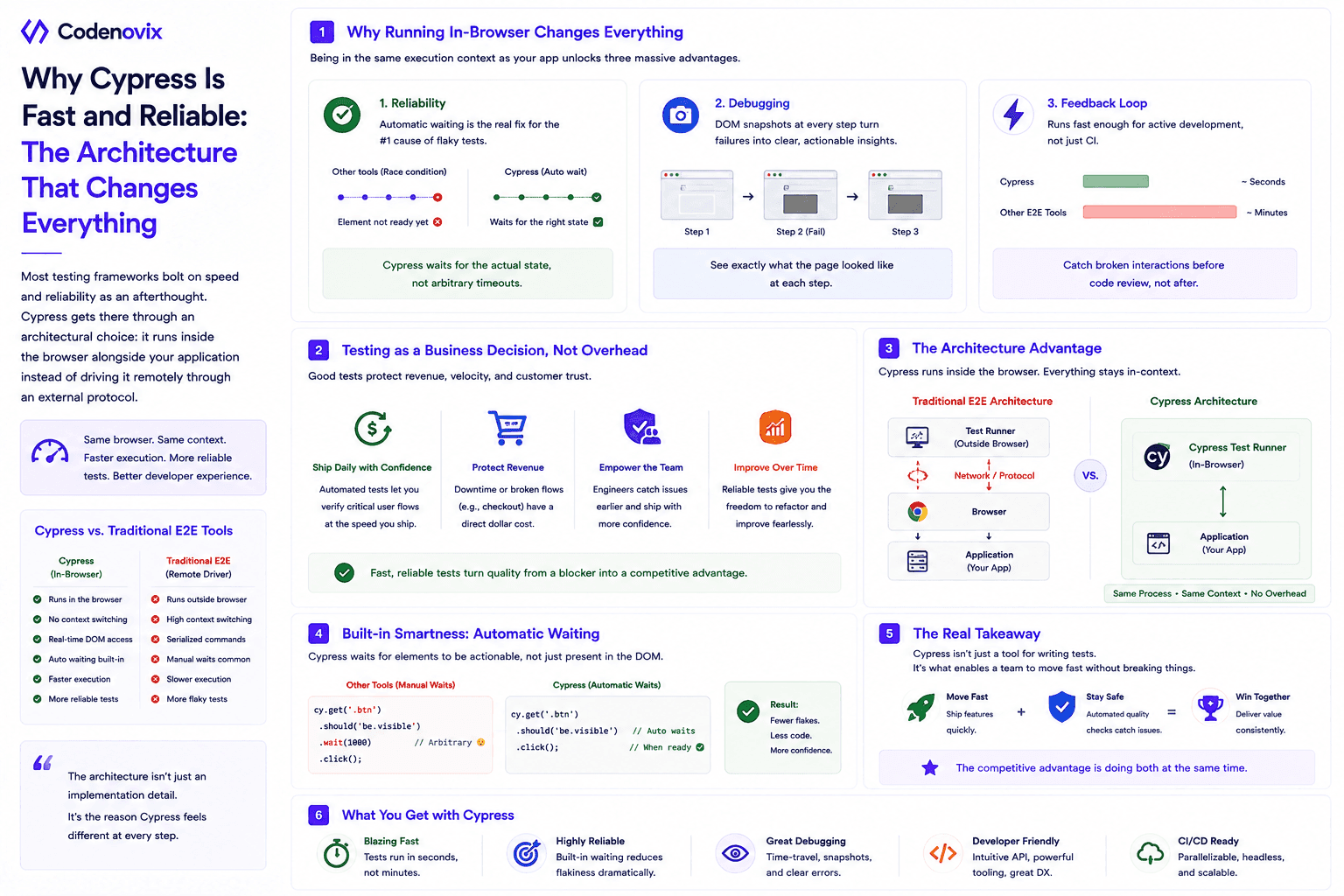
Most testing frameworks bolt on speed and reliability as an afterthought. Cypress gets there through an architectural choice: it runs inside the browser alongside your application instead of driving it remotely through an external protocol. That single decision removes most of the latency and coordination overhead that makes other end-to-end tools slow and flaky.
Why Running In-Browser Changes Everything
Being inside the same execution context as the app under test isn't just a performance trick — it's what makes the rest of Cypress's behavior possible.
- Reliability: automatic waiting is the real fix for the single biggest source of flaky tests — instead of racing against elements that haven't rendered yet, Cypress waits for the actual state it needs before asserting anything.
- Debugging: because it can capture DOM snapshots at every step, chasing down a failure stops being trial-and-error guesswork and becomes reading through exactly what the page looked like at each point.
- Feedback loop: tests run fast enough to use during active development, not just in CI — which means you catch a broken interaction before it ever reaches code review, not after.
Testing as a Business Decision, Not Overhead
The case for investing in this kind of test infrastructure isn't really a QA argument — it's a business one. Shipping daily only works if you can verify user-facing flows automatically at that pace; nobody can manually regression-test a critical checkout flow every single day. Downtime in that flow has a direct dollar cost. And a team with fast, reliable tests behaves differently — it catches problems before users do, instead of firefighting after a bad release.
The Real Takeaway
Cypress isn't just a testing framework bolted onto a project for coverage numbers — it's what actually lets a team move fast without that speed costing them stability. The competitive advantage was never "ship fast" or "ship safely" in isolation. It's having the automated quality checks that let you do both at once.
Found this useful?
Share it with the dev community or cross-post with a canonical link back here.
Cross-posting to dev.to or Hashnode? Use this as your canonical URL: https://www.codenovix.com/blog/cypress-testing-velocity-and-stability
Related articles
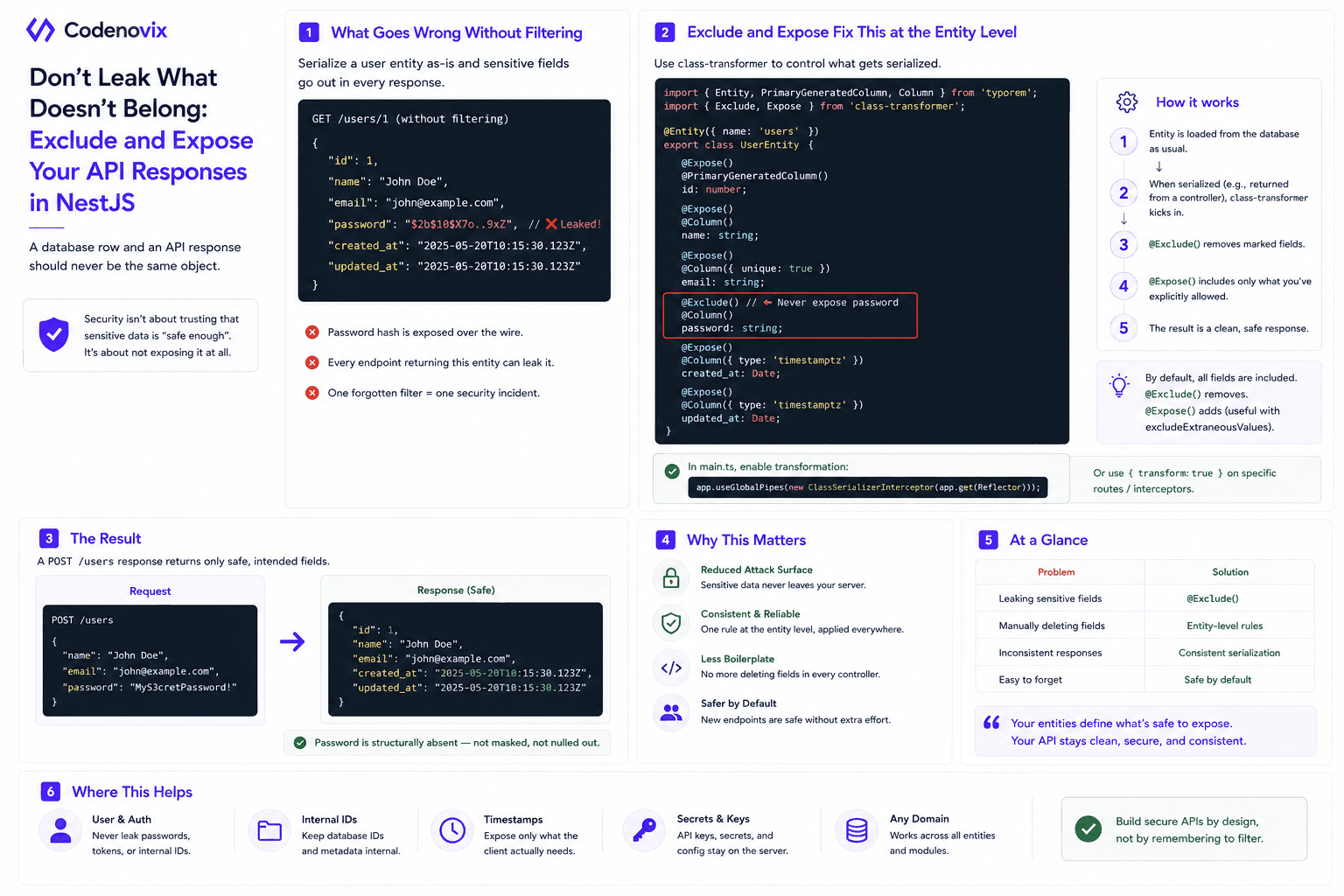
Using Exclude and Expose in NestJS Entities to Control API Responses
A hashed password still shouldn't leave your API. class-transformer's @Exclude and @Expose decorators make an entity define what's safe to serialize, instead of trusting every controller to filter it manually.
 Vanshit Patel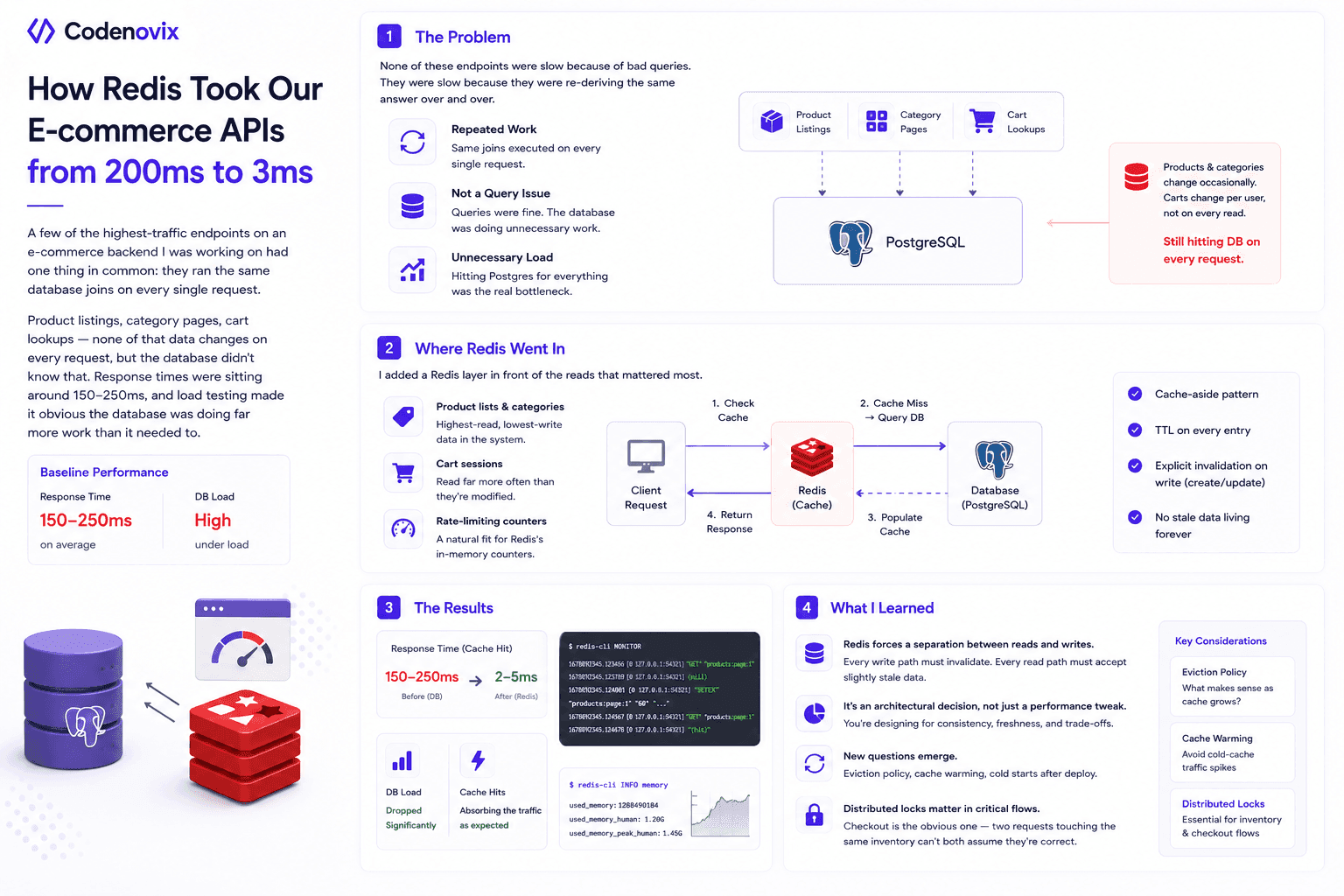
I Added Redis Caching to My E-Commerce Backend, and the Performance Difference Surprised Me
High-read endpoints were re-running the same database joins on every request, pushing response times to 150-250ms. Here's how a cache-aside Redis layer cut that to single-digit milliseconds.
Vanshit Patel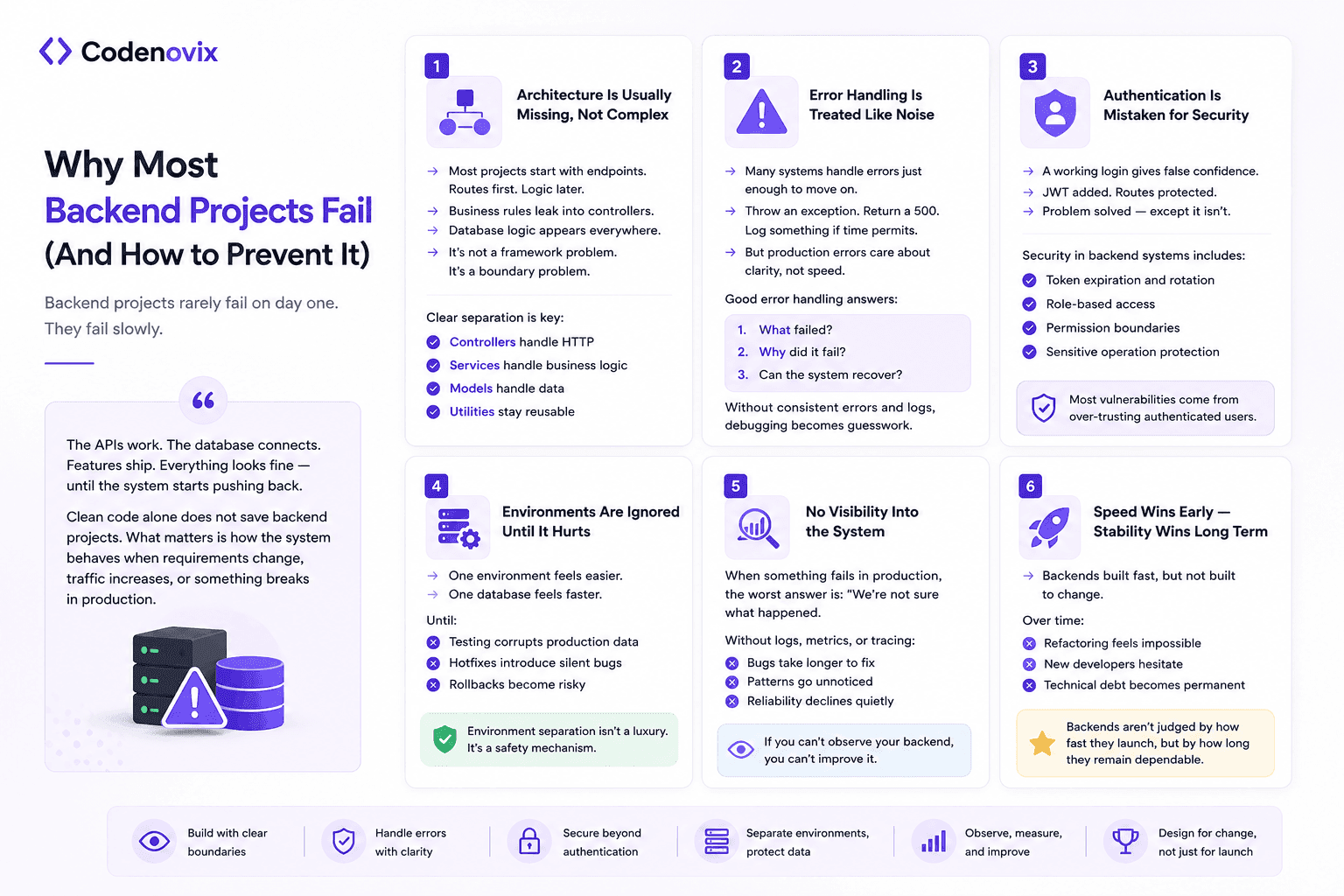
How Designing a Clean Backend Folder Structure Improved Performance and Scalability
A messy backend structure doesn't just look bad — it slows down debugging, onboarding, and scaling. Here's how reorganizing folders into Core, Config, Module, and Shared layers changed both.
Vanshit Patel