What I Learned About Concurrency-Safe Inventory Management in E-Commerce
Two users buying the last unit of the same variant at once shouldn't oversell your stock. How database transactions and row-level locking closed that race condition.
 Vanshit Patel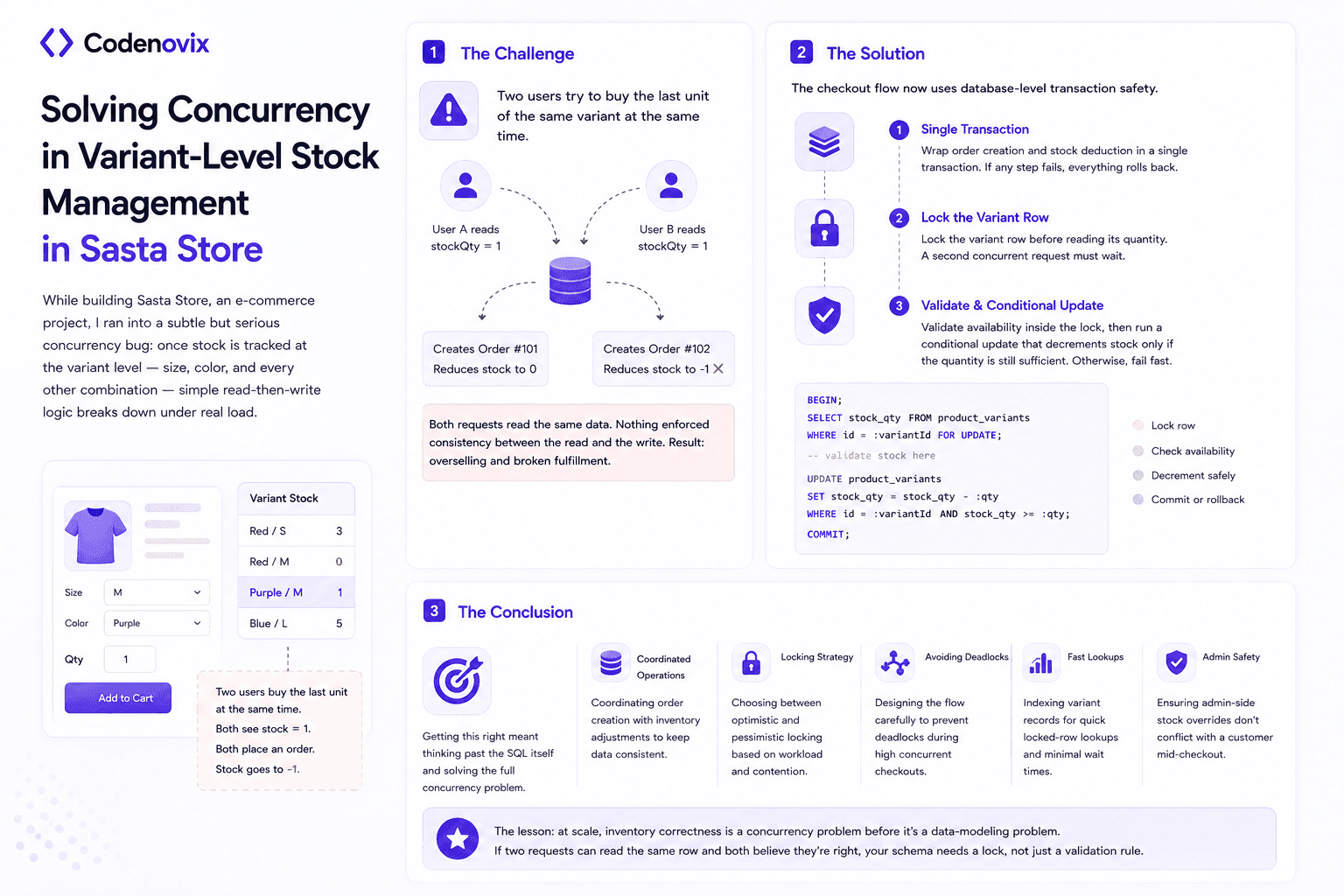
While building Sasta Store, an e-commerce project, I ran into a subtle but serious concurrency bug: once stock is tracked at the variant level — size, color, and every other combination — simple read-then-write logic breaks down under real load.
The Challenge
The bug shows up when two users try to buy the last unit of the same variant at the same time. Both requests read stockQty = 1, both create an order, and both reduce stock — the second deduction should have failed, but nothing enforced consistency between the read and the write. Multiply that across a busy sale, and you end up overselling constantly, shipping orders you can no longer fulfill.
The Solution
Application-layer checks weren't enough on their own; I needed database-level transaction safety. The checkout flow now:
- Wraps order creation and stock deduction in a single transaction, so a failure at any step rolls back the whole operation instead of leaving orders and inventory out of sync.
- Locks the variant row before reading its quantity, so a second concurrent request has to wait instead of reading stale data.
- Validates availability inside the lock, then runs a conditional update that decrements stock only if the quantity is still sufficient, failing fast with a clear error otherwise.
The Conclusion
Getting this right meant thinking past the SQL itself: coordinating order creation with inventory adjustments, choosing between optimistic and pessimistic locking, avoiding deadlocks under heavy concurrent checkout traffic, indexing for fast locked-row lookups, and making sure admin-side stock overrides never collide with a customer mid-checkout.
The lesson: at scale, inventory correctness is a concurrency problem before it's a data-modeling problem. If two requests can read the same row and both believe they're right, your schema needs a lock, not just a validation rule.
Found this useful?
Share it with the dev community or cross-post with a canonical link back here.
Cross-posting to dev.to or Hashnode? Use this as your canonical URL: https://www.codenovix.com/blog/concurrency-safe-inventory-management-ecommerce
Related articles
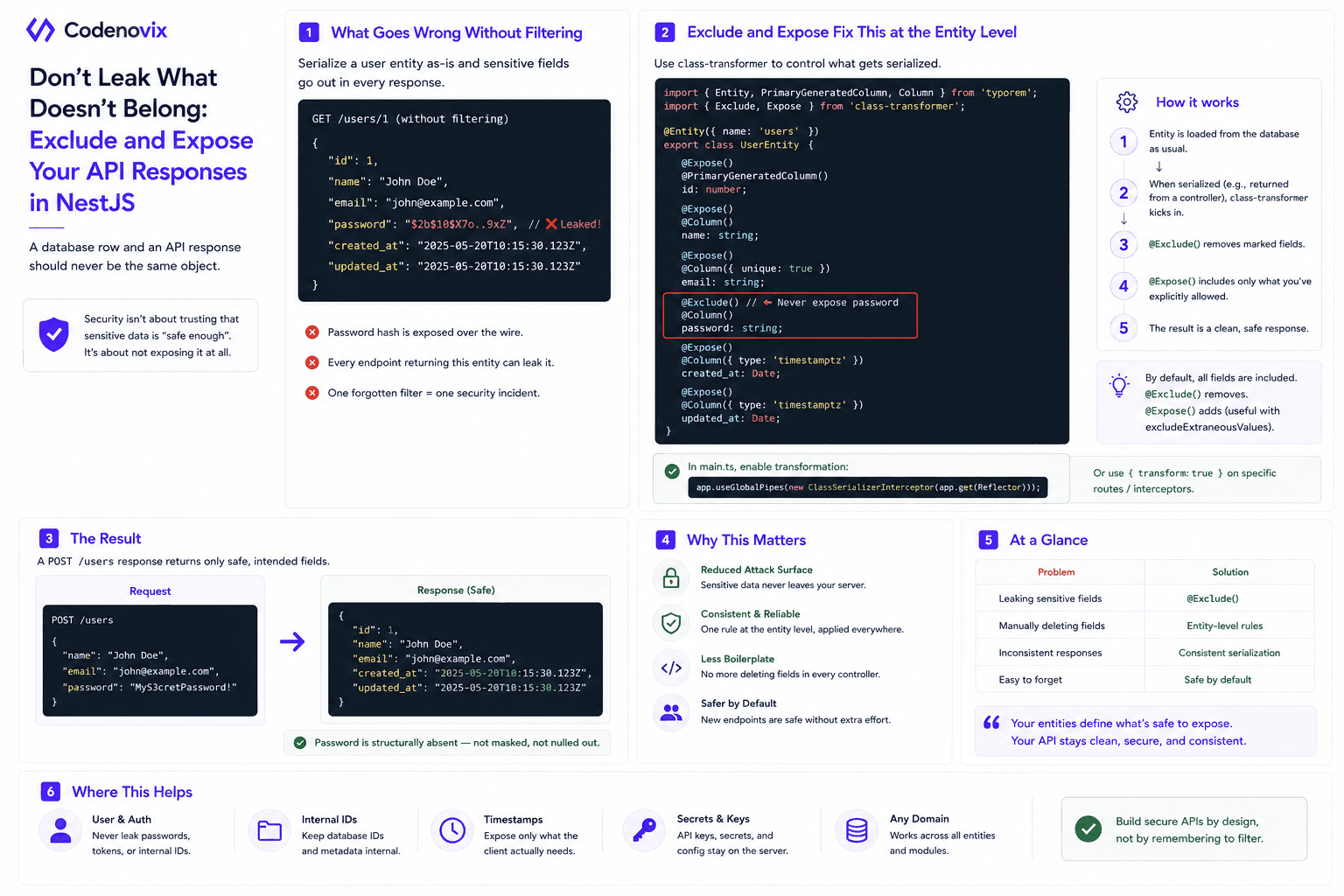
Using Exclude and Expose in NestJS Entities to Control API Responses
A hashed password still shouldn't leave your API. class-transformer's @Exclude and @Expose decorators make an entity define what's safe to serialize, instead of trusting every controller to filter it manually.
 Vanshit Patel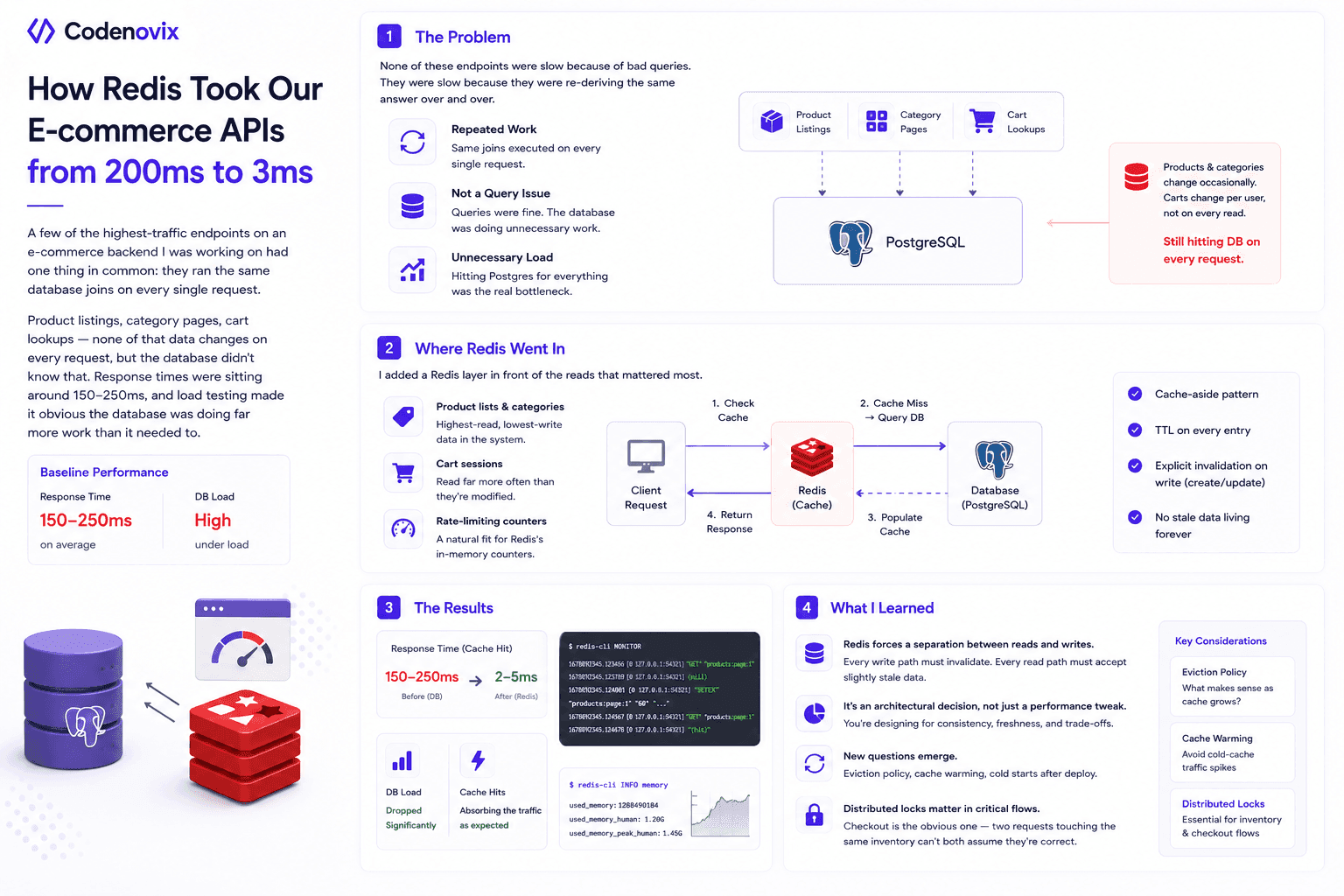
I Added Redis Caching to My E-Commerce Backend, and the Performance Difference Surprised Me
High-read endpoints were re-running the same database joins on every request, pushing response times to 150-250ms. Here's how a cache-aside Redis layer cut that to single-digit milliseconds.
Vanshit Patel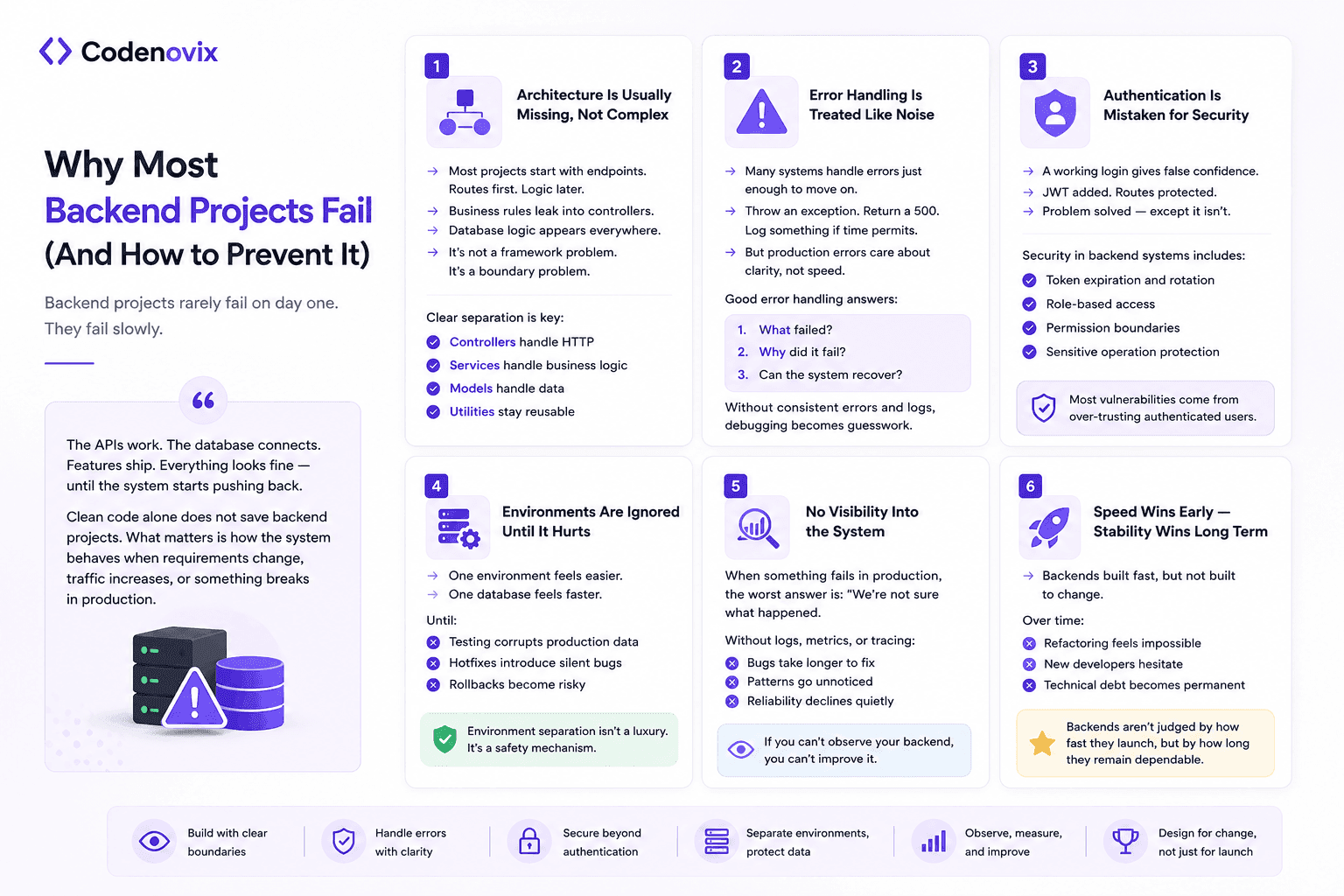
How Designing a Clean Backend Folder Structure Improved Performance and Scalability
A messy backend structure doesn't just look bad — it slows down debugging, onboarding, and scaling. Here's how reorganizing folders into Core, Config, Module, and Shared layers changed both.
Vanshit Patel