Understanding React Hooks in Depth
A deep look at useState, useEffect, useContext, useRef, and custom hooks — and how they interact with React's rendering model.
 Vanshit Patel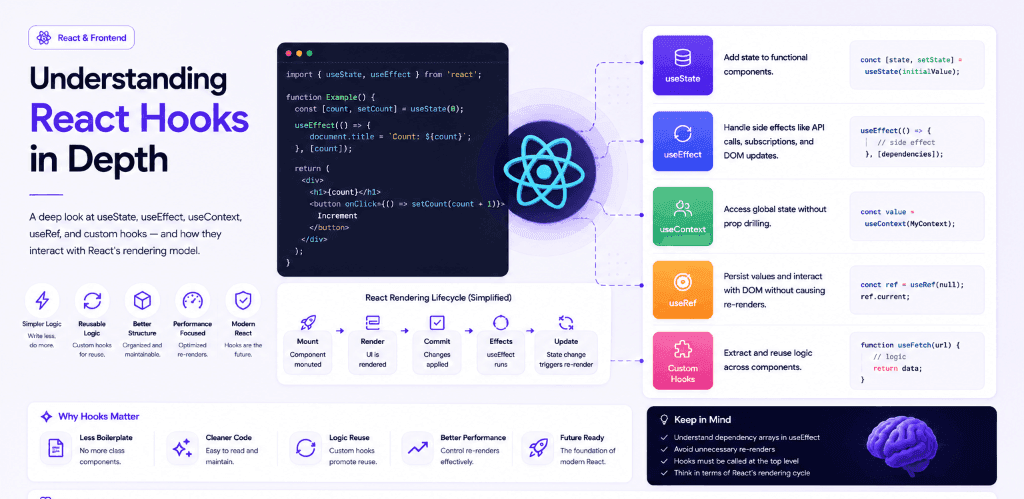
React Hooks are one of the most important concepts in modern React development. They allow developers to use state and lifecycle features inside functional components, removing the need for class components.
Before hooks, managing state required class components. This often made code complex, especially when dealing with lifecycle methods like componentDidMount, componentDidUpdate, and componentWillUnmount. Hooks simplified this by providing a cleaner and more intuitive way to manage logic.
useState
The most commonly used hook is useState. It allows you to add state to functional components. Instead of writing large class-based logic, you can manage state in just a few lines. It improves readability and reduces boilerplate code.
useEffect
Another important hook is useEffect. It is used to handle side effects such as API calls, subscriptions, and DOM updates. It replaces multiple lifecycle methods with a single, more flexible function. However, understanding dependency arrays is very important to avoid unnecessary re-renders.
useContext
useContext is useful for managing global state without passing props through multiple levels. It helps solve the problem of prop drilling and makes state sharing easier across components.
useRef
useRef is often used to directly interact with DOM elements or to persist values without causing re-renders. It is also useful for handling timers, previous values, and more.
Custom Hooks
Custom hooks are where the real power of hooks comes in. They allow you to extract and reuse logic across multiple components. This leads to cleaner architecture and better code organization.
Things to Keep in Mind
While hooks simplify development, they also require a clear understanding of how React rendering works. Misusing hooks, especially useEffect, can lead to performance issues or bugs.
In real-world applications, hooks are used everywhere. From handling API calls to managing forms and authentication, they are the backbone of React applications.
If you want to become a strong React developer, you should focus on deeply understanding hooks and how they interact with component rendering.
Found this useful?
Share it with the dev community or cross-post with a canonical link back here.
Cross-posting to dev.to or Hashnode? Use this as your canonical URL: https://www.codenovix.com/blog/understanding-react-hooks-in-depth
Related articles
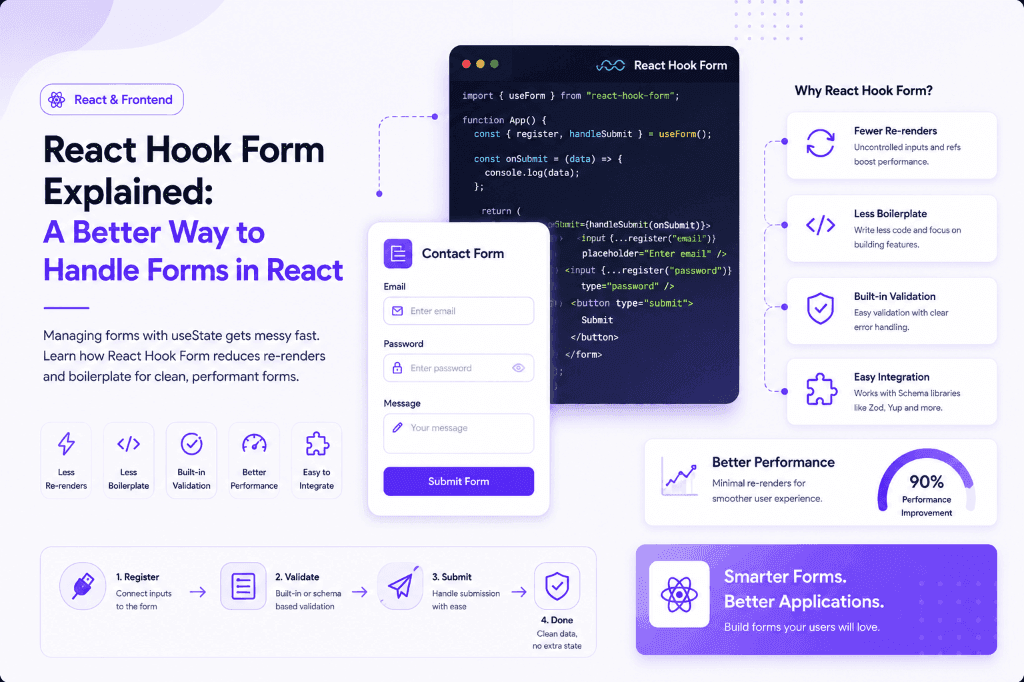
React Hook Form Explained: A Better Way to Handle Forms in React
Managing forms with useState gets messy fast. Learn how React Hook Form reduces re-renders and boilerplate for clean, performant forms.
 Vanshit Patel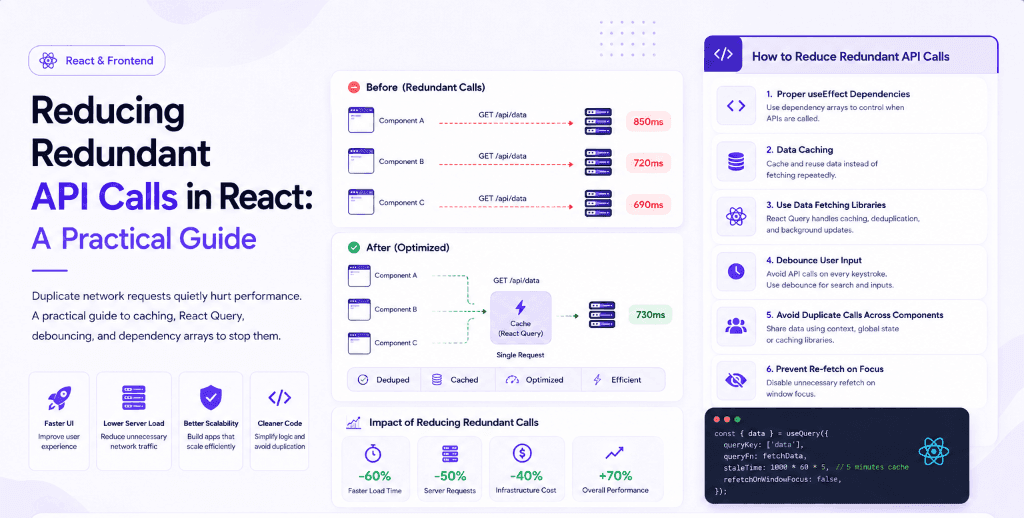
Reducing Redundant API Calls in React: A Practical Guide
Duplicate network requests quietly hurt performance. A practical guide to caching, React Query, debouncing, and dependency arrays to stop them.
Vanshit Patel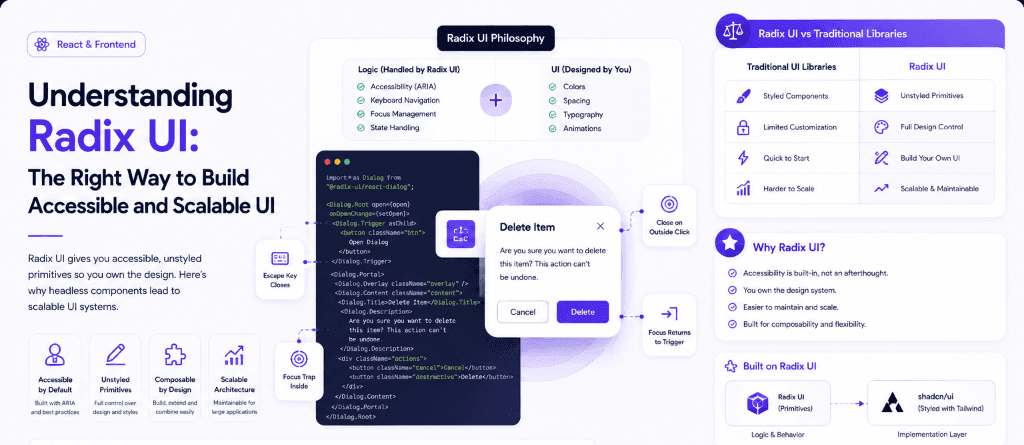
Understanding Radix UI: The Right Way to Build Accessible and Scalable UI
Radix UI gives you accessible, unstyled primitives so you own the design. Here's why headless components lead to scalable UI systems.
Vanshit Patel